0%

How to Take Better Sims 4 Screenshots: A Complete Visual Guide for Storytellers

from: TheSimsTree 12831
26.12.2025 Share:

Creating beautiful screenshots in The Sims 4 isn't just about graphics or mods. It's about knowing how to see the shot: understanding where the eye falls, how light works, what creates emotion, and which details help tell a story without words.

This guide is put together for those who want to improve their visual skills – from taking your first steps with the camera to conscious composition, working with light, and building a visual narrative for legacies, blogs, and storytelling.
Promo: Create your Sims family tree

Block 1. Fundamentals of Visual Perception

To take screenshots that truly catch the eye, you need to start not with technique, but with the ability to see the frame. Most beginners pose their sim, hit the camera button, and hope it turns out nice. But an expressive shot is always the result of how the viewer will read it.

In this block, we'll break down the simplest yet most essential principles of visual perception: where the eye falls, what draws attention, how to avoid overload, and how to make a frame clear and readable.

1. How the Viewer Reads a Frame

When someone looks at a screenshot, they don't consciously analyze it. The eye simply looks for a point it can latch onto: a character, an action, a bright color, a pool of light. If there are too many of these points, attention scatters – the frame becomes "noisy," and the emotional content gets lost.

✔ What this looks like in practice

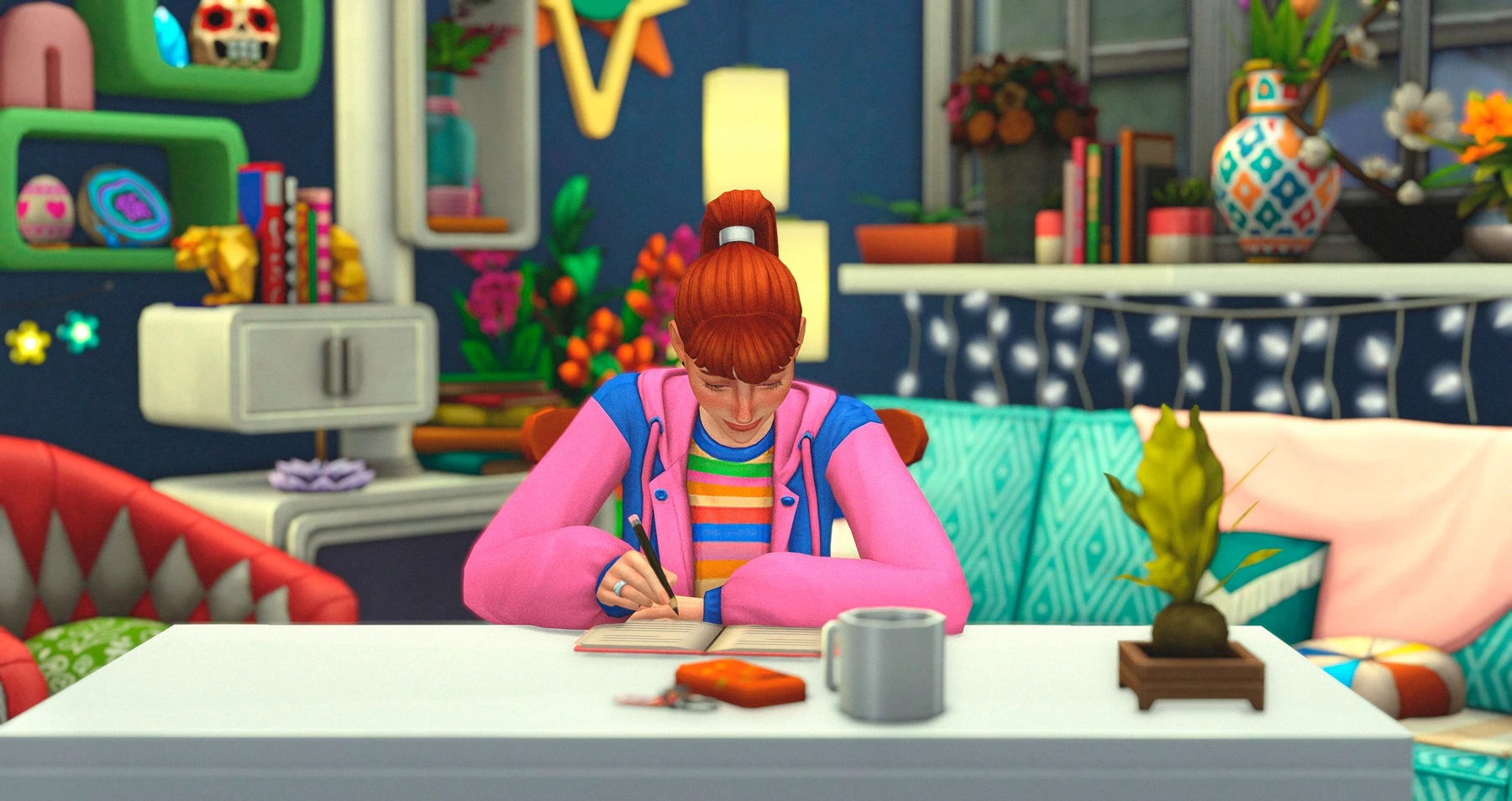
In the first screenshot:

  • lots of small details, colorful elements, bright decor;
    • the eye jumps between objects;
      • the character isn't highlighted – they get lost in the surroundings.
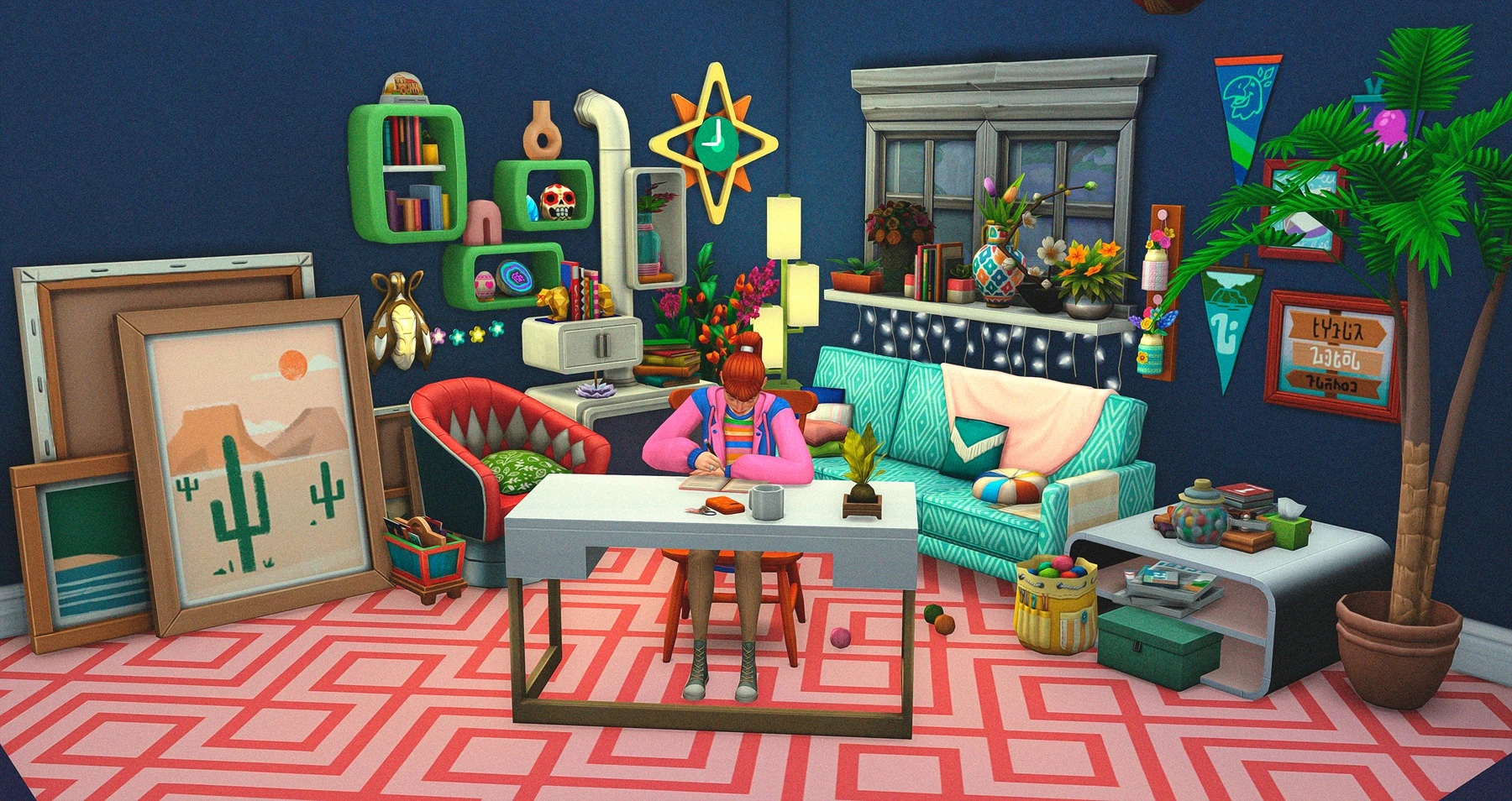
        In the second frame:

        • the camera is closer, the background softly blurs;
          • the eye immediately lands on the action – she's writing in a notebook;
            • the frame reads easily and naturally.

              2. Visual Focal Point

              A focal point is what grabs attention in the first second. It could be a character, an object, a gesture, a color, light – anything that carries meaning. If there's no focal point, the frame looks "washed out." If there's one focal point, even the simplest screenshot becomes expressive.

              ✔ Example with a red mug

              In a calm beige kitchen, a bright red mug appears. It instantly draws the eye and helps create the mood of the scene – warm, lively, personal.
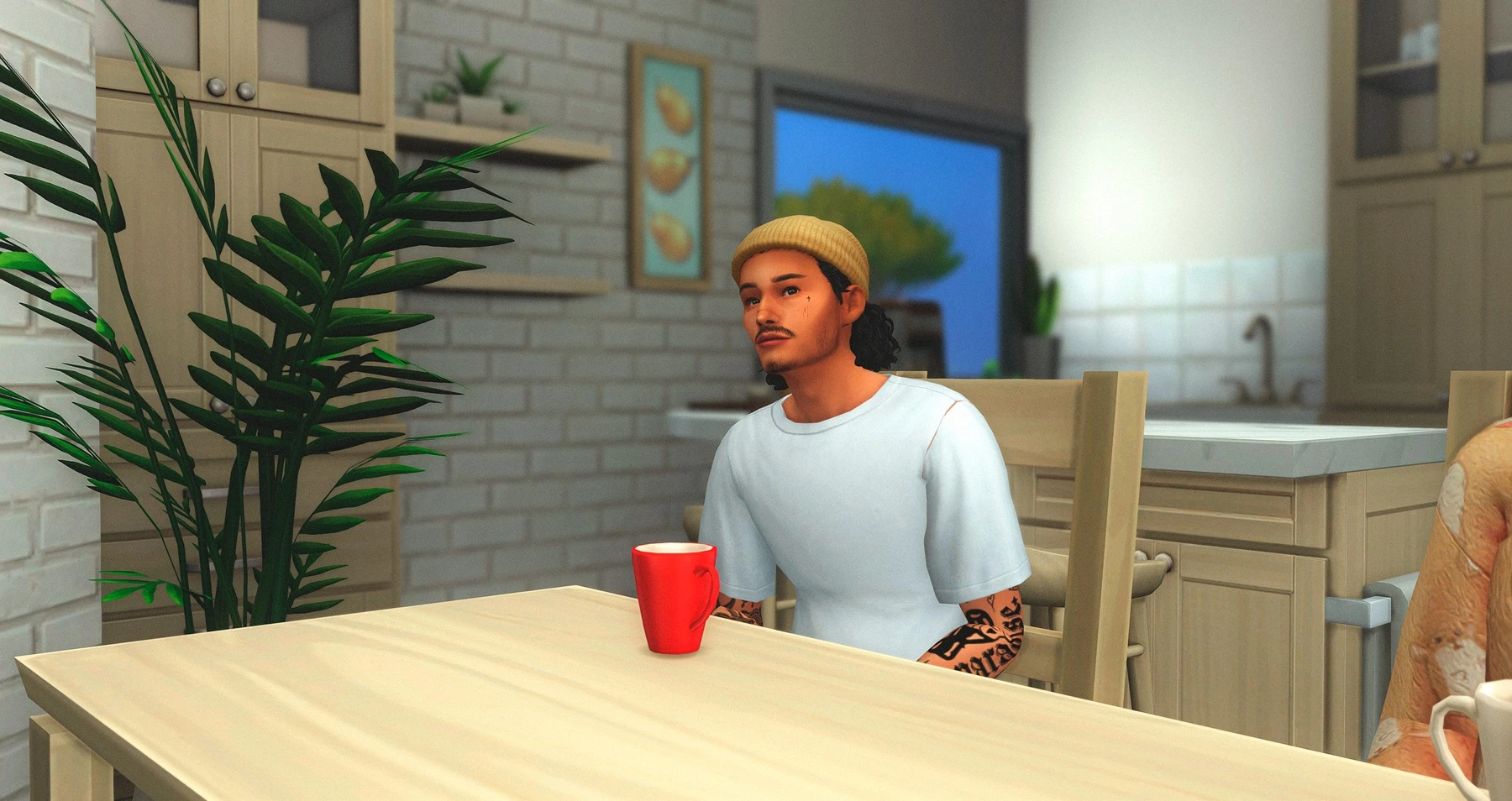
              Now imagine this scene with the same white mug as the table: the frame immediately loses energy.
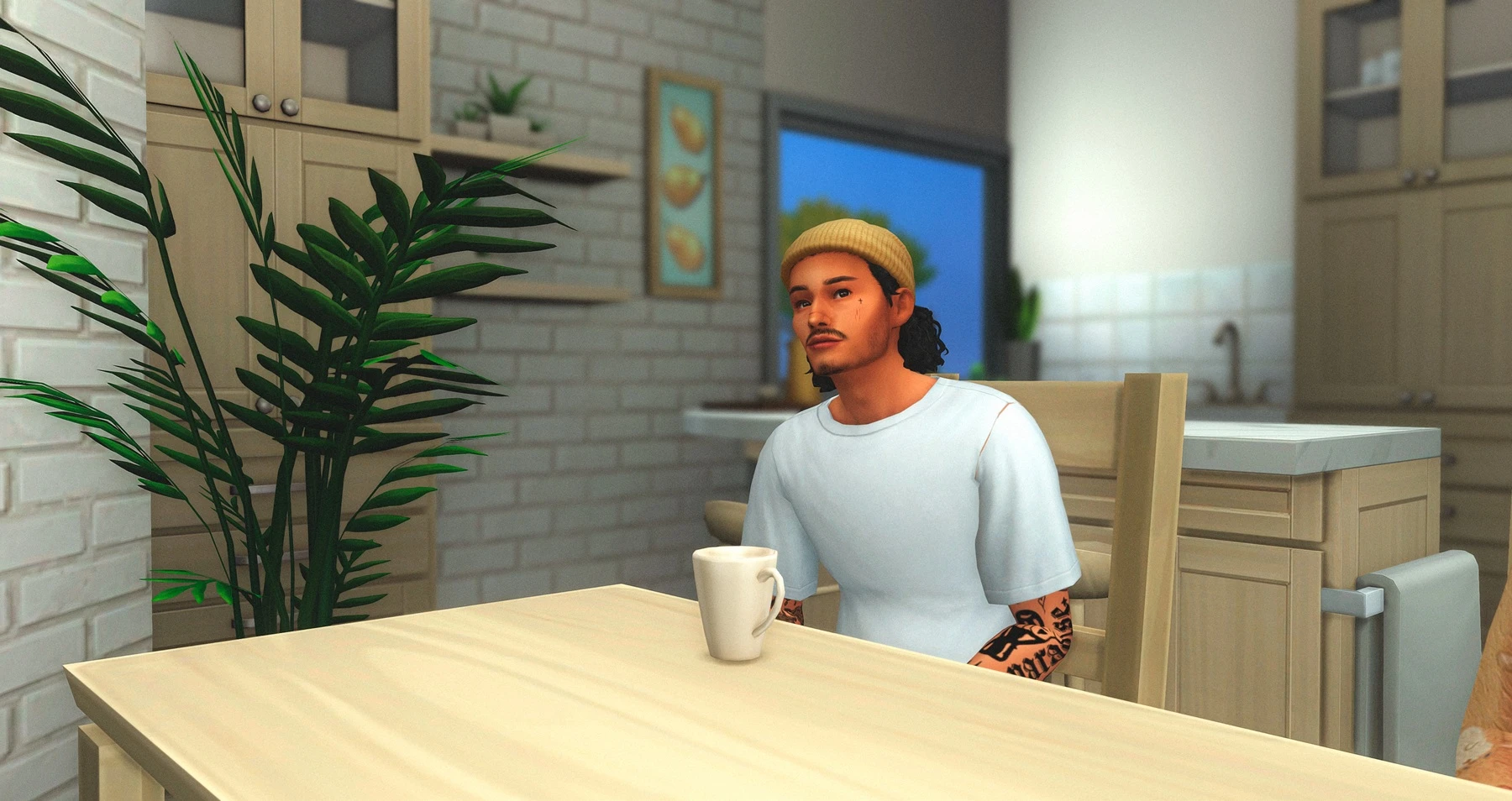
              The moral: even a small object can make a frame stronger.

              3. Visual Balance

              Balance is the harmony of a frame. It doesn't have to be symmetry – what matters is that elements don't "pull" attention in different directions. A frame without balance looks heavy; a frame with balance looks calm and confident.

              ✔ Example

              In one screenshot, the table is overloaded with a pile of objects: books, headphones, a cup, a notebook, and on the left there's emptiness: the viewer sees everything except the character.
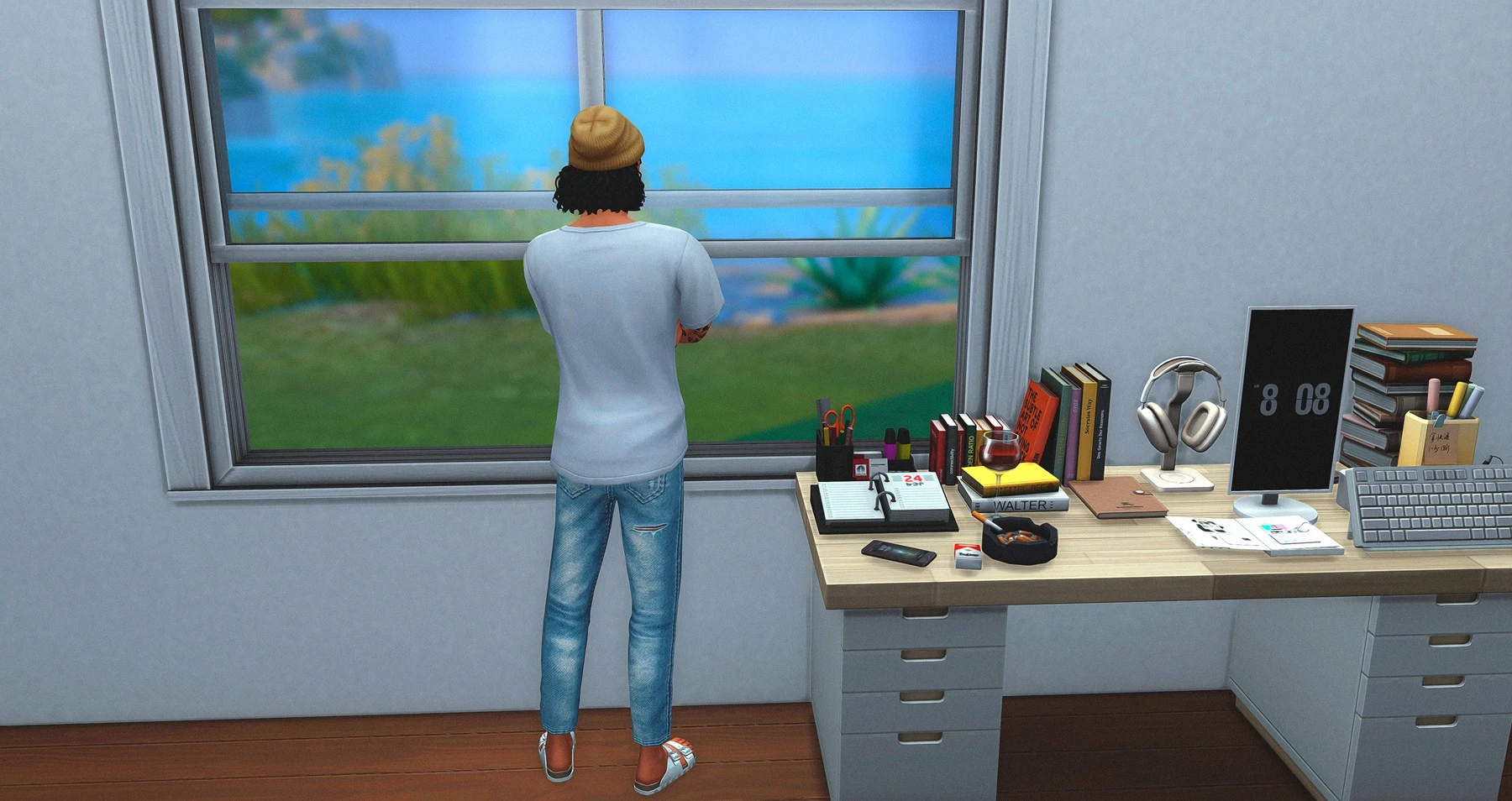
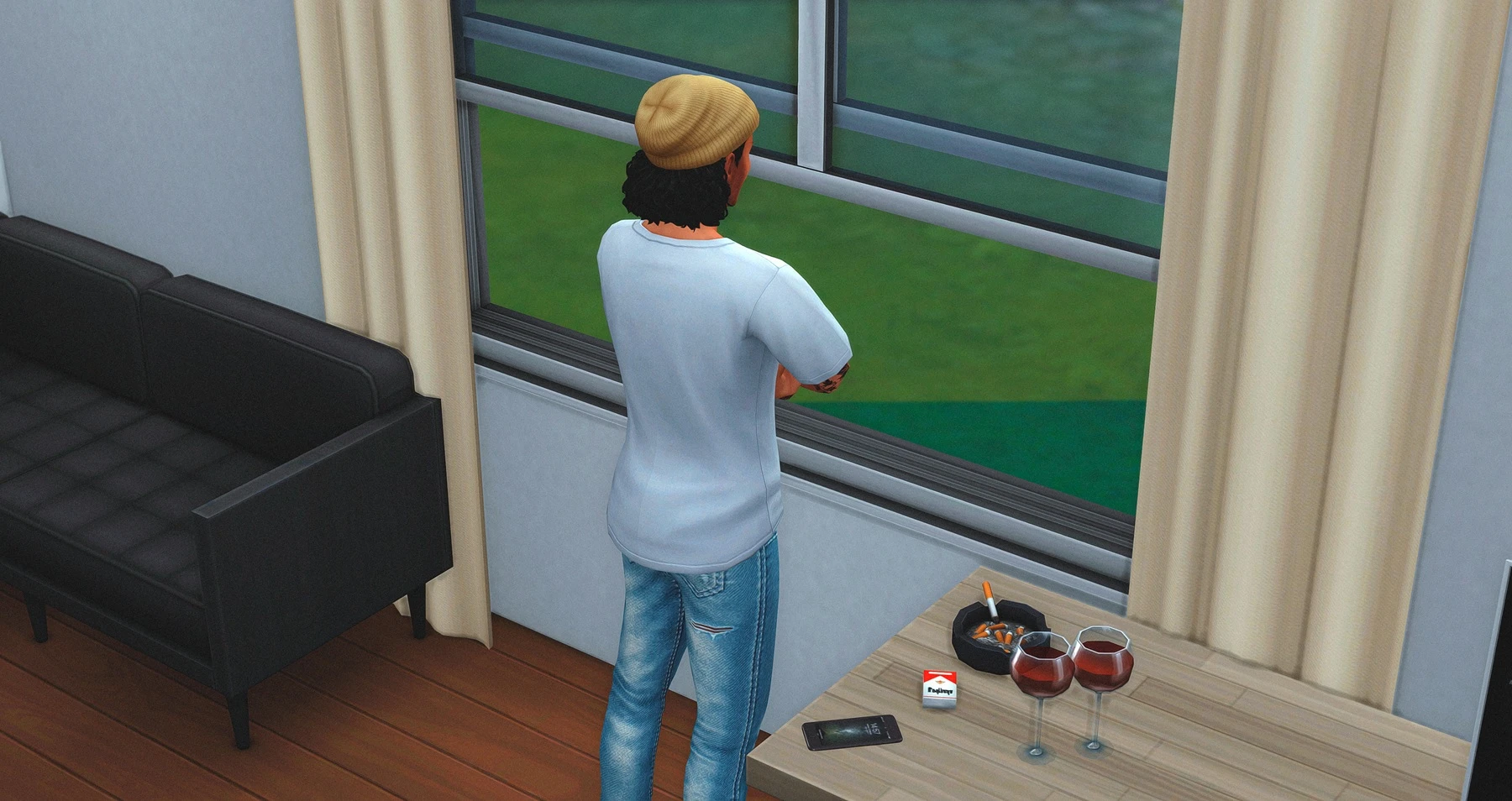
              In another screenshot, the objects are reduced to a few meaningful elements:

              • two wine glasses,
                • a phone,
                  • cigarettes.

                    And here a story emerges: he's waiting for someone. Now we're reading not the interior, but the moment.

                    A great example of how balance and choice of details create emotional context, while we still don't see the character's emotions.
                    4. Simple Rule of Three Questions

                    Before each screenshot, ask yourself:

                    1) What's the main thing here?

                    The character? An object? An action? The mood?

                    2) What's distracting?

                    Overly bright objects, clutter, unnecessary details, harsh lines.

                    3) What should the viewer feel?

                    Warmth, loneliness, anticipation, calm, movement?

                    If you can answer these three questions, it means the frame will turn out clear.

                    5. Intuitive Frame Vision

                    With experience comes the "photographic eye" – the ability to notice a moment, composition, light, even when the scene is simple.

                    But you can learn this faster if you train the skill:

                    • look at the frame through the viewer's eyes
                      • remove what's unnecessary
                        • lead the eye toward the main thing
                          • use details consciously

                            A beautiful screenshot isn't about decor. It's about meaning, focus, and clarity of frame.

                            Block 2. Camera and Framing

                            When you start controlling the camera in Sims 4 consciously, the frame stops being a random screenshot and becomes a full-fledged visual tool. Here you're "taking the camera in your hands" for the first time – choosing height, angle, distance, and frame. These decisions determine how expressive and alive your screenshot will be.

                            1. Getting to Know the Camera

                            Most players start with the "normal" perspective at eye level. But it's enough to slightly change the camera height for the scene to become much deeper and more emotional.

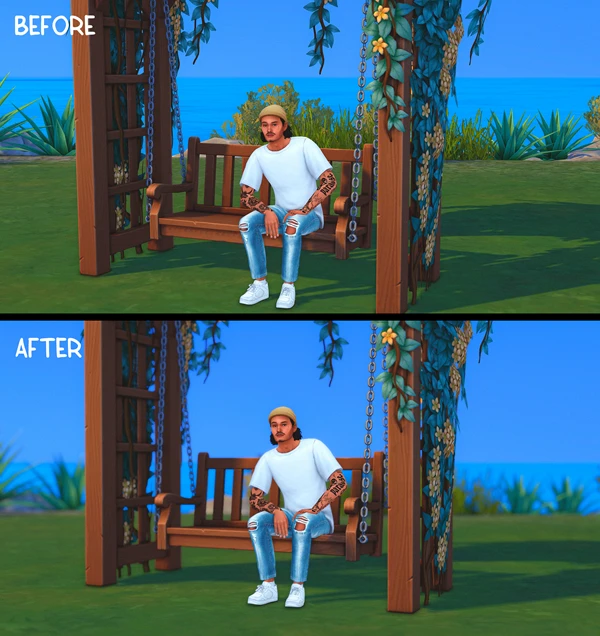
                            In the example below, you can see how the same character looks different:

                            — In the normal perspective, the frame remains flat and "game-like."

                            — As soon as you lower the camera a bit and add a blurred background, the shot immediately gains depth, softness appears, and you get the feeling of a living moment.

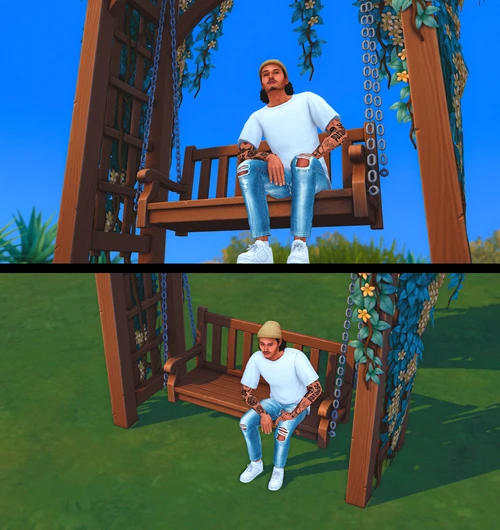
                            The same works with height:

                            — Shooting from above makes the character visually smaller, softer, more vulnerable.

                            — Shooting from below – stronger, more confident, dominant.

                            These small camera shifts completely change perception.

                            About Background Blur (DOF)

                            To achieve soft, cinematic background blur, GShade or ReShade is used – external tools that add depth of field effect (DOF) to the game. It helps highlight the character against the surroundings and create the feeling of a real camera.

                            You don't have to use complex presets – the most basic DOF is enough. Light blur already makes the frame deeper and more pleasing to the eye.

                            1) Normal vs cinematic (before/after)

                            — Same sim, same pose, same background

                            — "Before": camera straight on, no DOF

                            — "After": camera slightly lower + DOF enabled
                            2) Camera height difference

                            — Same character

                            — From above downward

                            — From below upward
                            2. Shots: From Wide to Close-Up

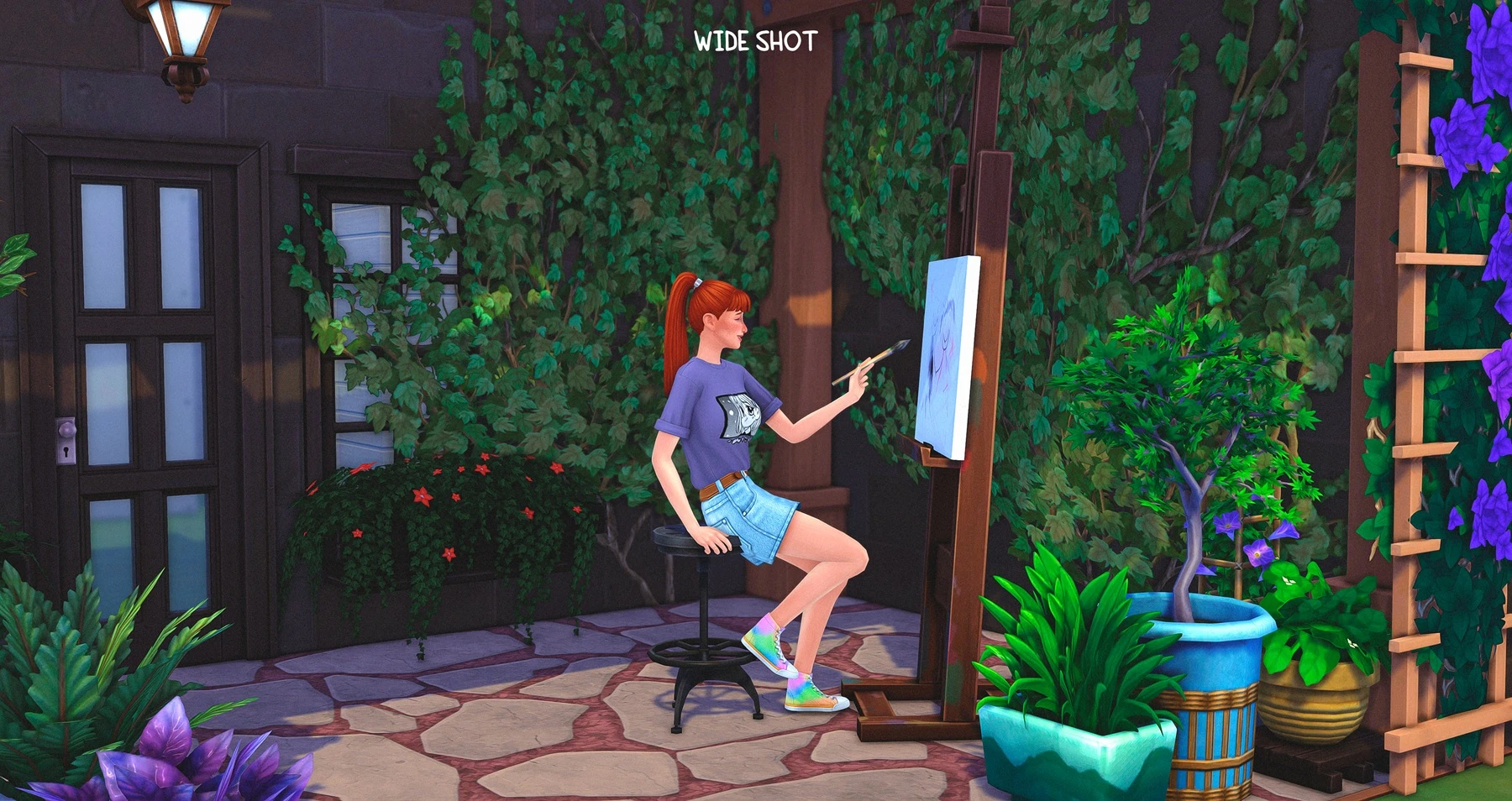
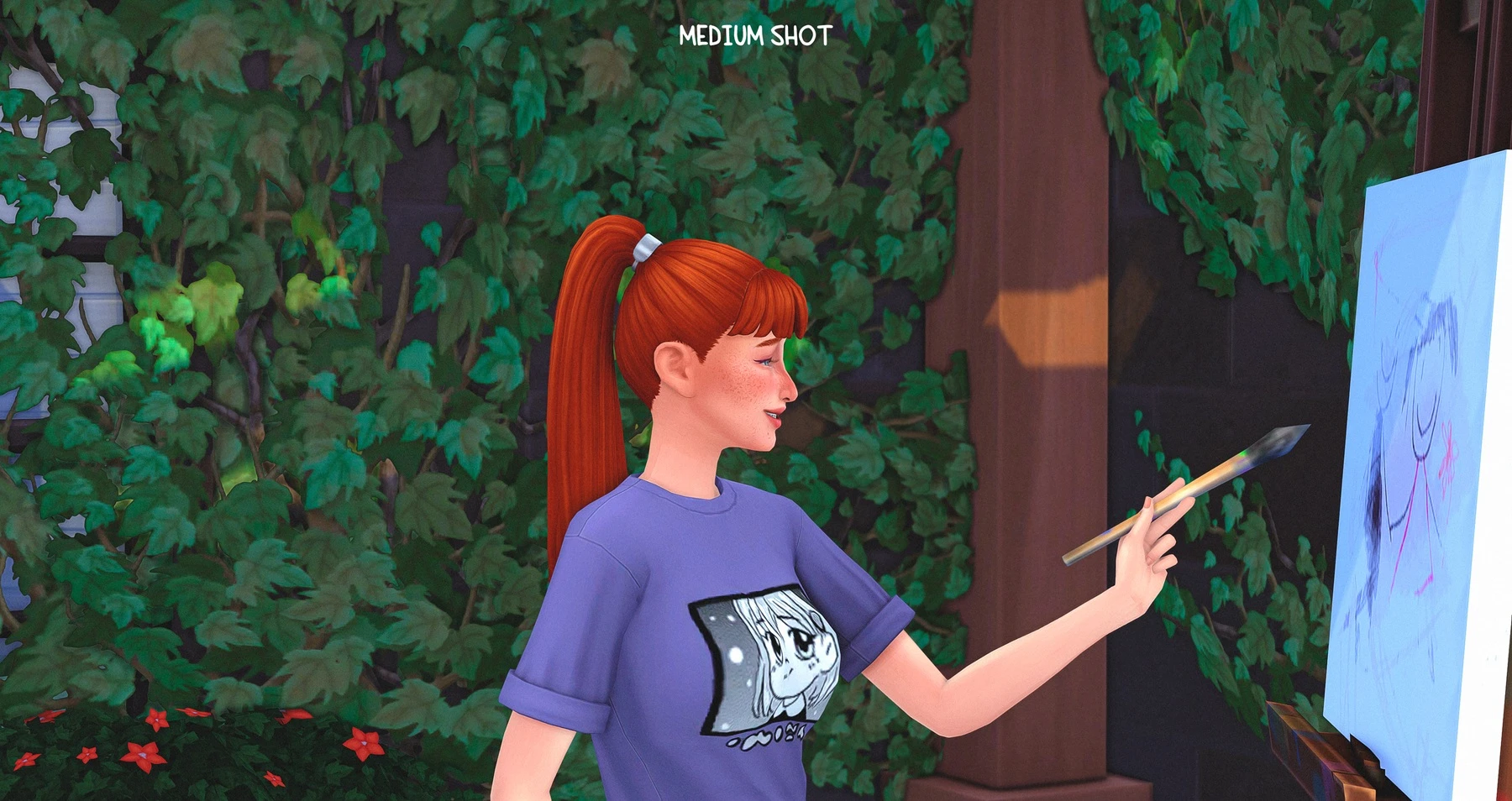
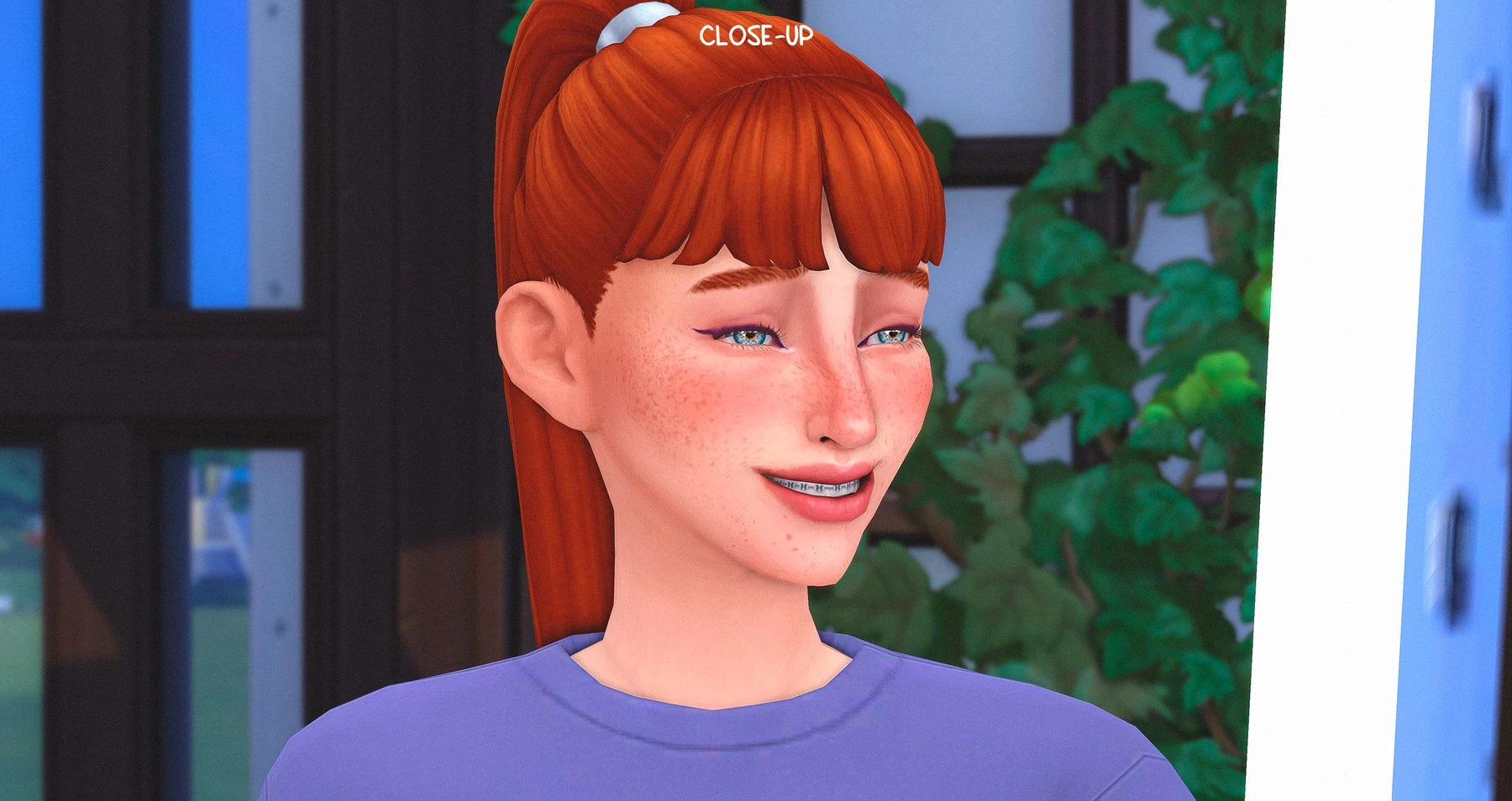
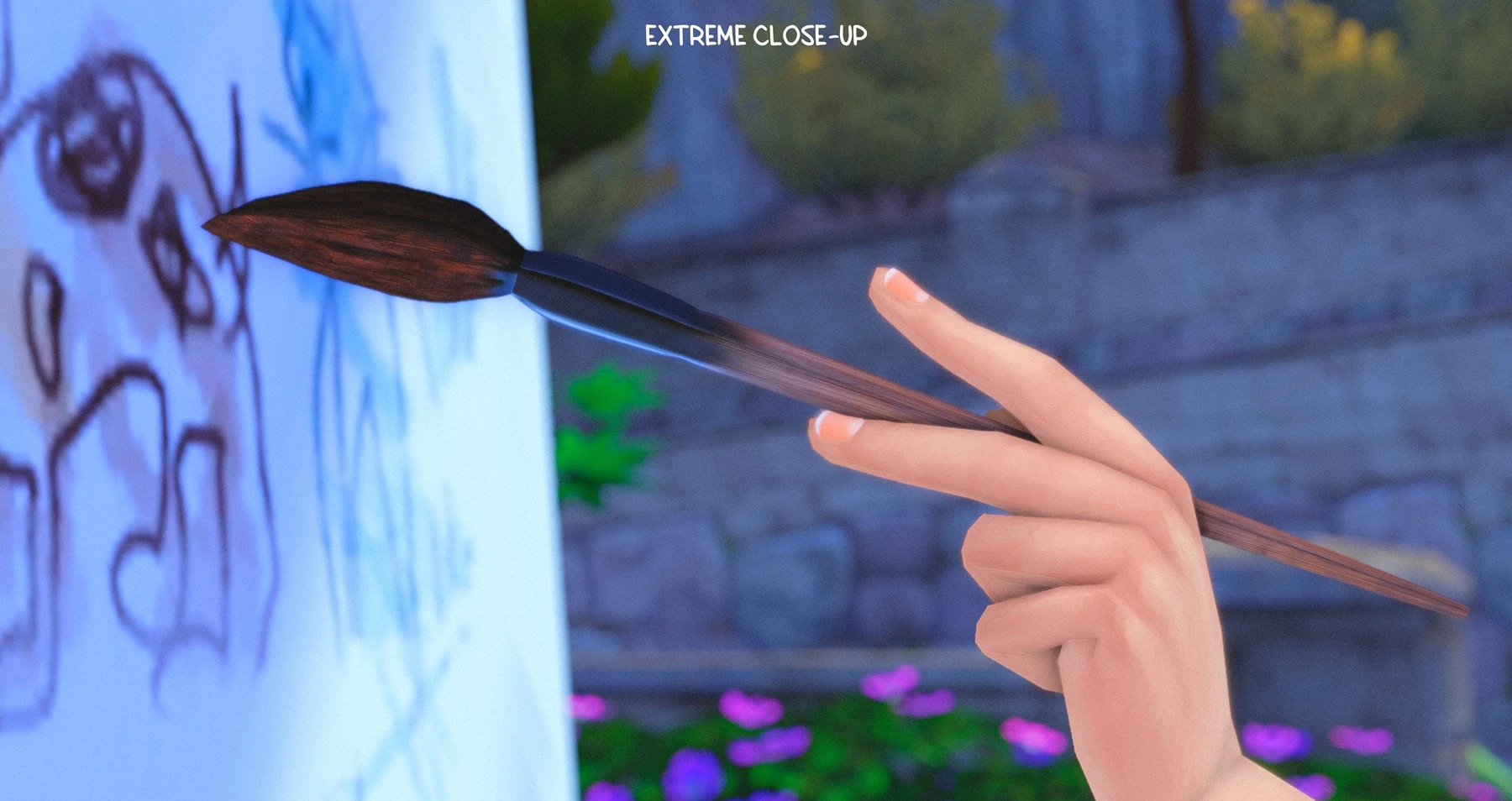
                            A shot is the distance from the camera to the character. It determines what exactly the viewer will see first: the space, the action, the emotion, or a detail. In the example below, you can see how one moment can be conveyed in four ways:

                            A wide shot introduces us to the location, shows the atmosphere.

                            Medium shot shows interaction and gestures.

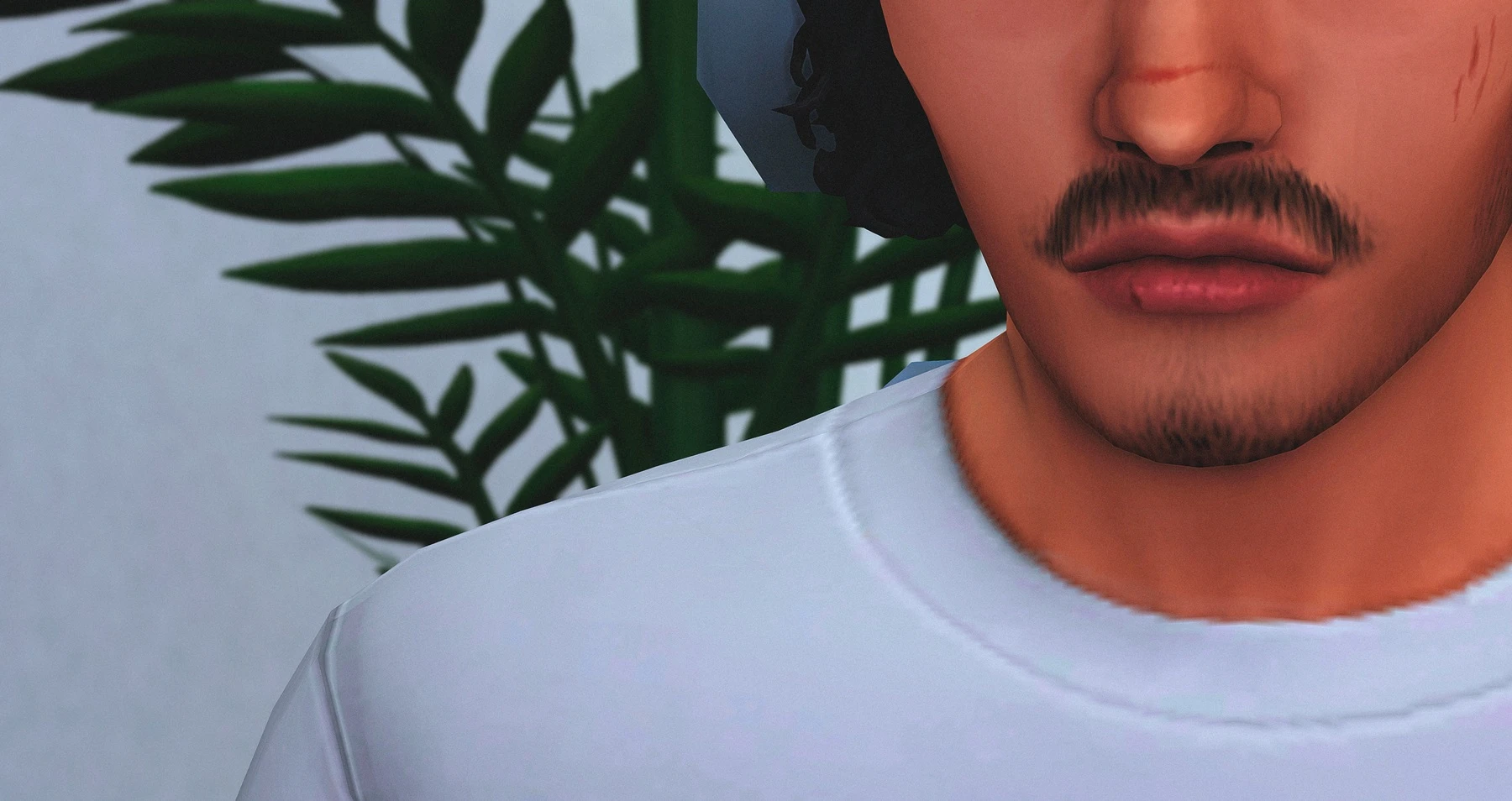
                            Close-up captures emotions.

                            Macro emphasizes the meaning of an important detail: a look, hands, an object.

                            Proper alternation of shots is the foundation of expressive visual storytelling.

                            1) Wide – sim in surroundings
                            2) Medium – chest/waist up
                            3) Close-up – face, emotion
                            4) Macro – hands, look, object
                            3. Framing: Keep What Matters

                            Framing is the choice of what enters the frame and what stays beyond its borders. Good framing makes a screenshot cleaner, more expressive, and fills it with meaning.

                            A frame that's too wide loses focus: the character is small, there's a lot of empty space.

                            Proper framing makes the scene tight, brings the emotion closer, and removes unnecessary noise.

                            Additional techniques:

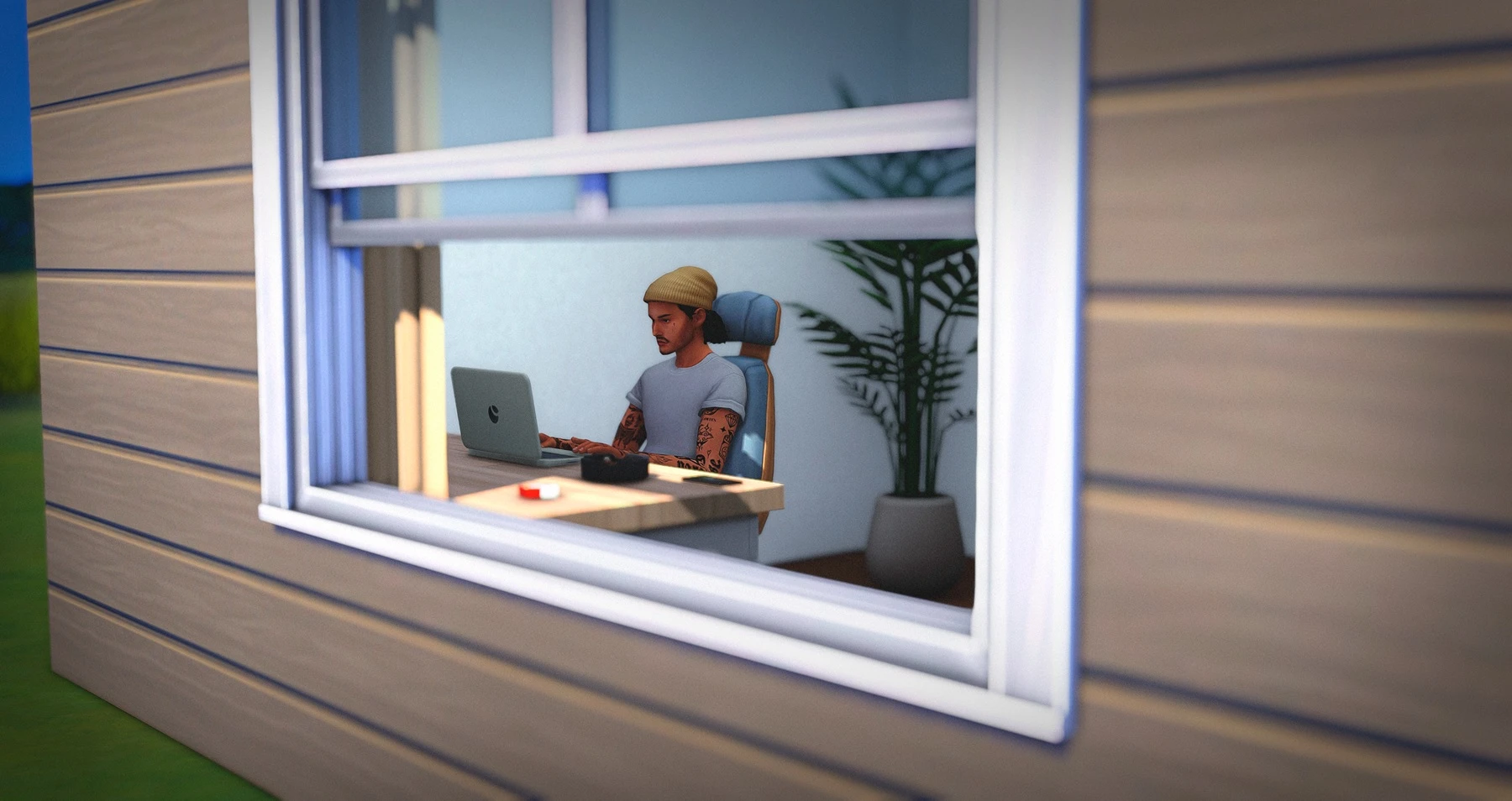
                            • Frame within a frame: doors, windows, mirrors create a natural frame inside the scene.
                              • Cropping: a partially cut-off face or detail creates intimacy and amplifies emotion.

                                1) Frame within a frame: character in a doorway/window/mirror
                                2) Cropping for emotion: partially cropped face, detail on hands, an object to convey mood – more often it's tension or focus.
                                4. One Moment – Three Camera Perspectives

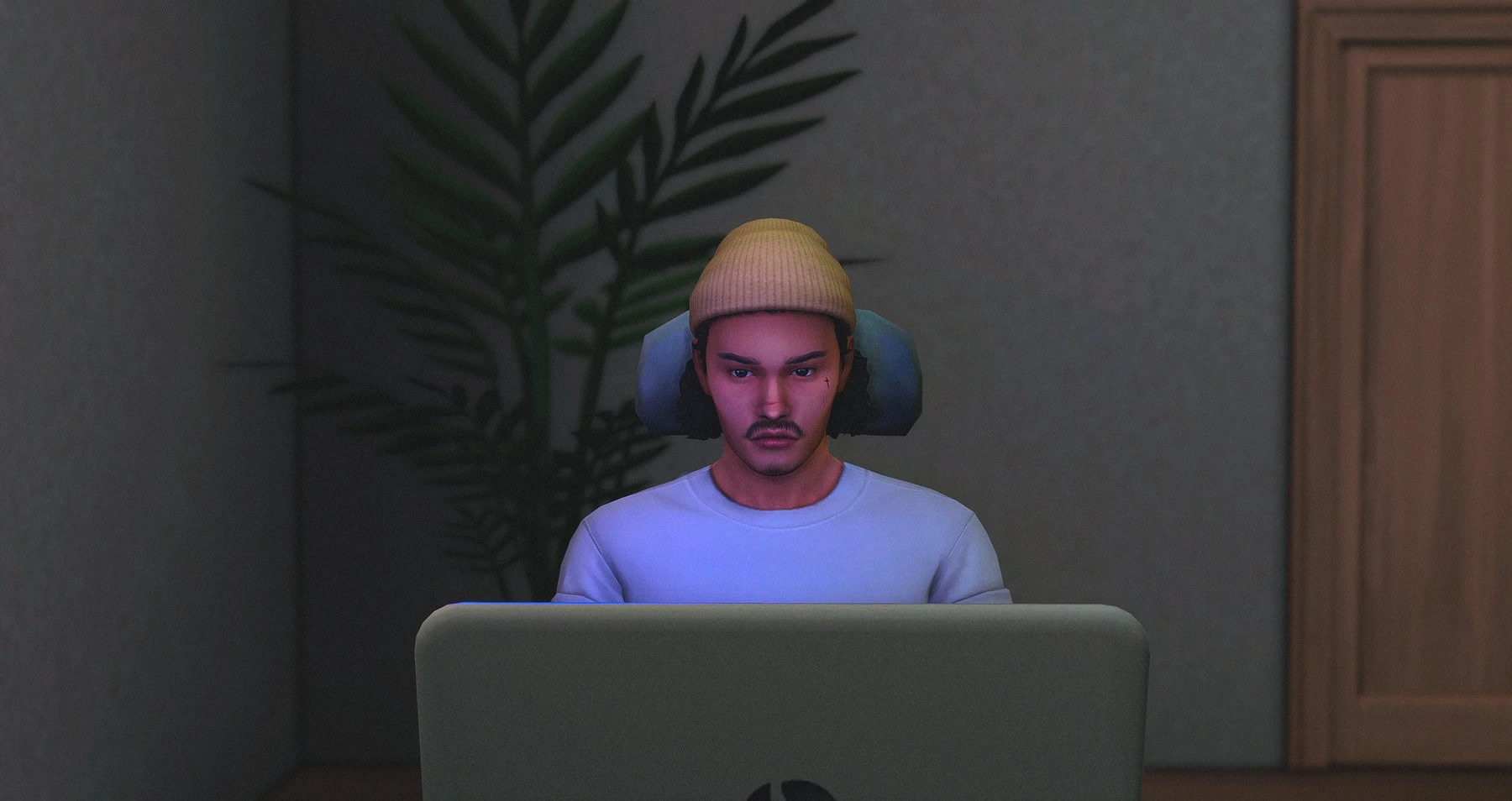
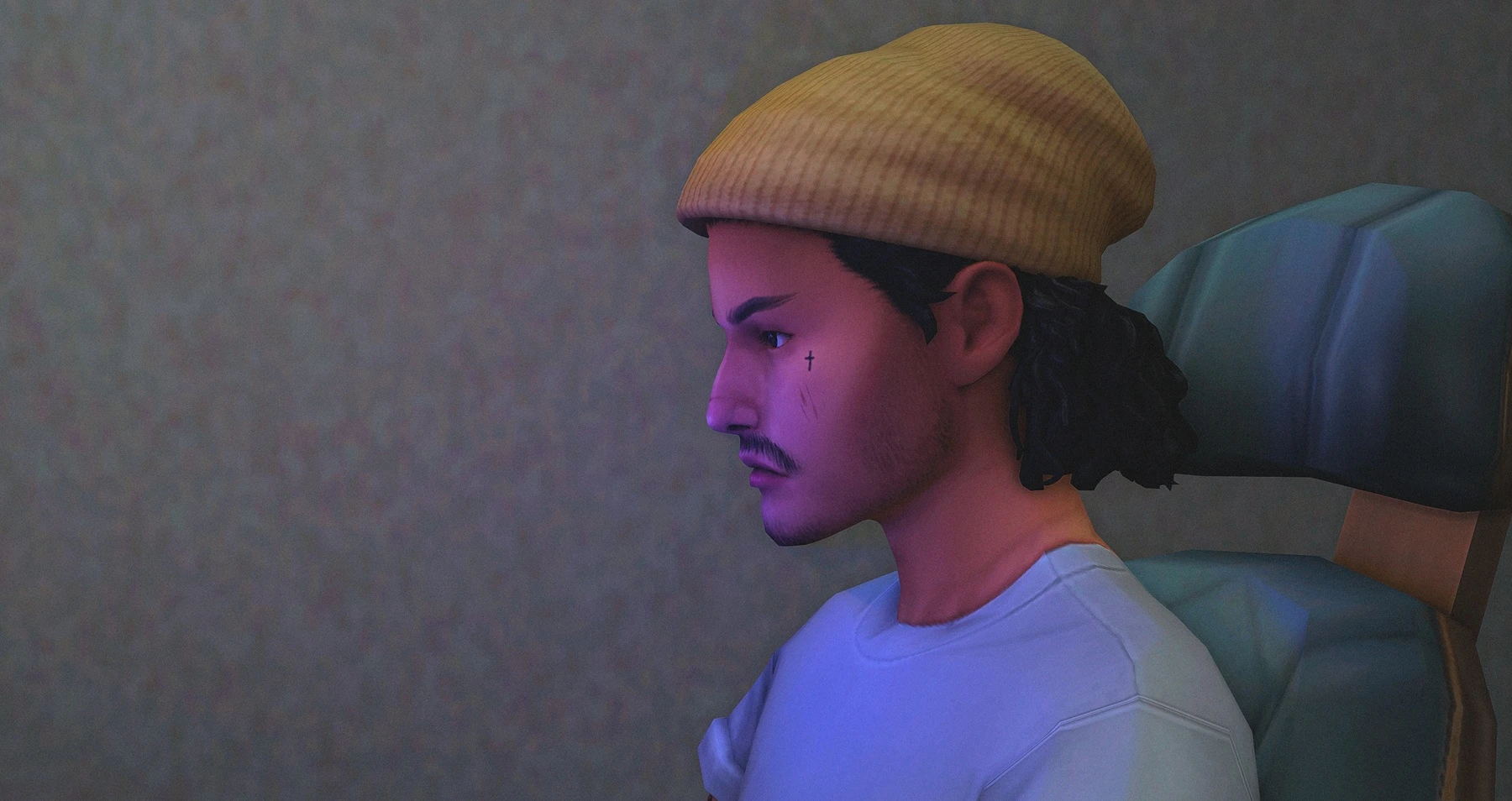
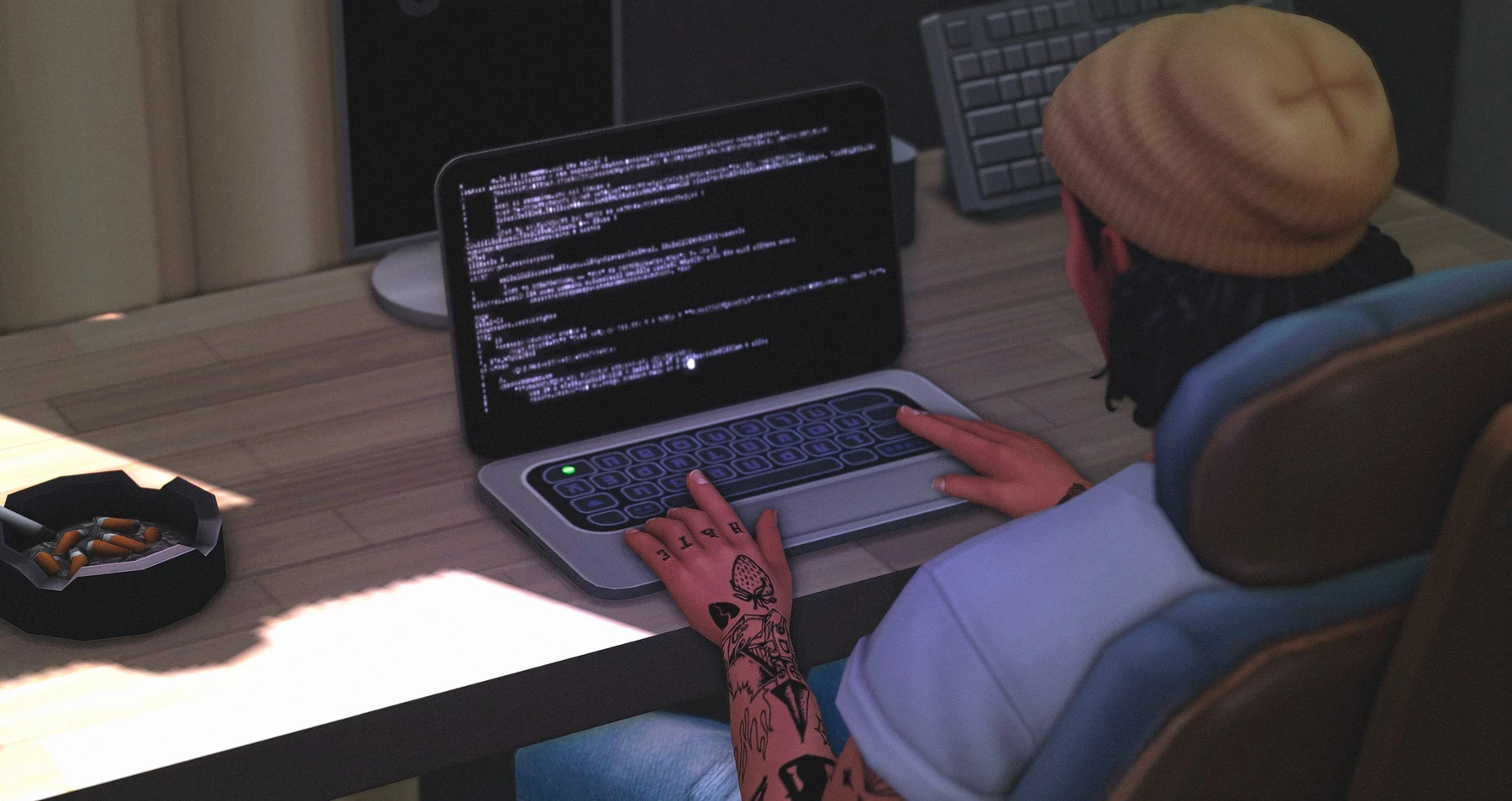
                                Sometimes the angle matters more than the pose itself. One and the same moment – a sim looking out a window, drinking coffee, sitting at a table—can look:

                                • even and calm,
                                  • lively and dynamic,
                                    • intimate and emotional.

                                      It all depends on the angle.

                                      In the example below:

                                      Frontal angle – neutral, "documentary."
                                      Side angle – feeling of loneliness and turning inward.
                                      Over the shoulder – creates the effect of presence, as if the viewer is standing inside the scene.
                                      Additional techniques:

                                      Shooting from above emphasizes softness, weakness, or everyday atmosphere.

                                      Shooting from below amplifies significance, drama, or the character's confidence.

                                      Diagonal makes the frame livelier, adds dynamics.

                                      The camera is the first tool that makes screenshots expressive. When you know how to choose height, distance, and angle, even a simple scene comes alive. You start controlling the viewer's attention, which means you're creating frames that people want to look at.

                                      Block 3. Composition

                                      Composition is what makes a frame cohesive and expressive. It helps the viewer immediately understand where the main subject is, what mood the scene is in, and where the eye should go. Even with perfect light and a good angle, a frame can "fall apart" if the composition isn't organized.

                                      In this section – the most practical, simple, and visually clear principles that will help you create frames that are pleasing to the eye and organic.

                                      1. Rule of Thirds

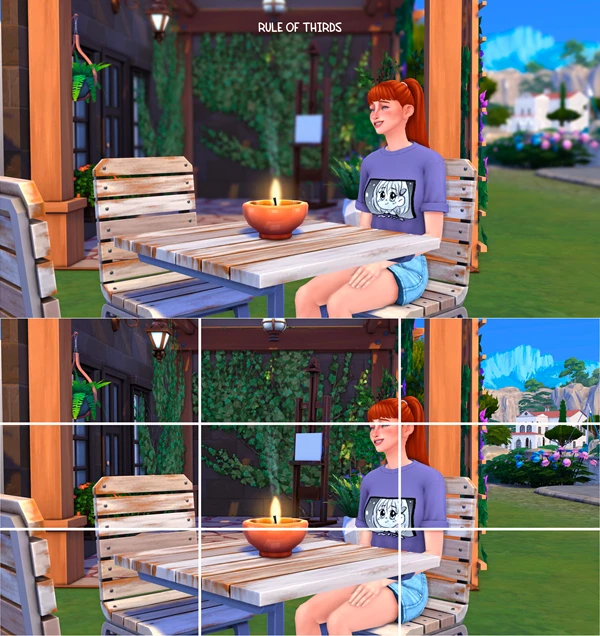
                                      If you divide the frame into three parts vertically and horizontally, the points where they intersect become the most expressive zones. When a character stands exactly in the center, the frame often looks flat and static. As soon as you shift the character closer to a third line, the composition becomes livelier, the eye gently follows to the right point.

                                      Why this works: our brain reads an object positioned not in the center but slightly to the side more quickly – this way the frame "breathes" and is perceived more naturally.

                                      In the example you can see:

                                      Central composition is static and "game-like"
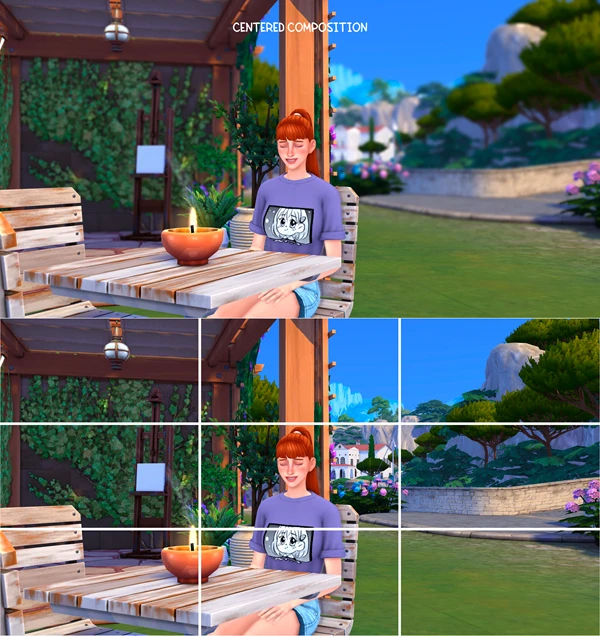
                                      Shifting along the thirds creates balance and movement
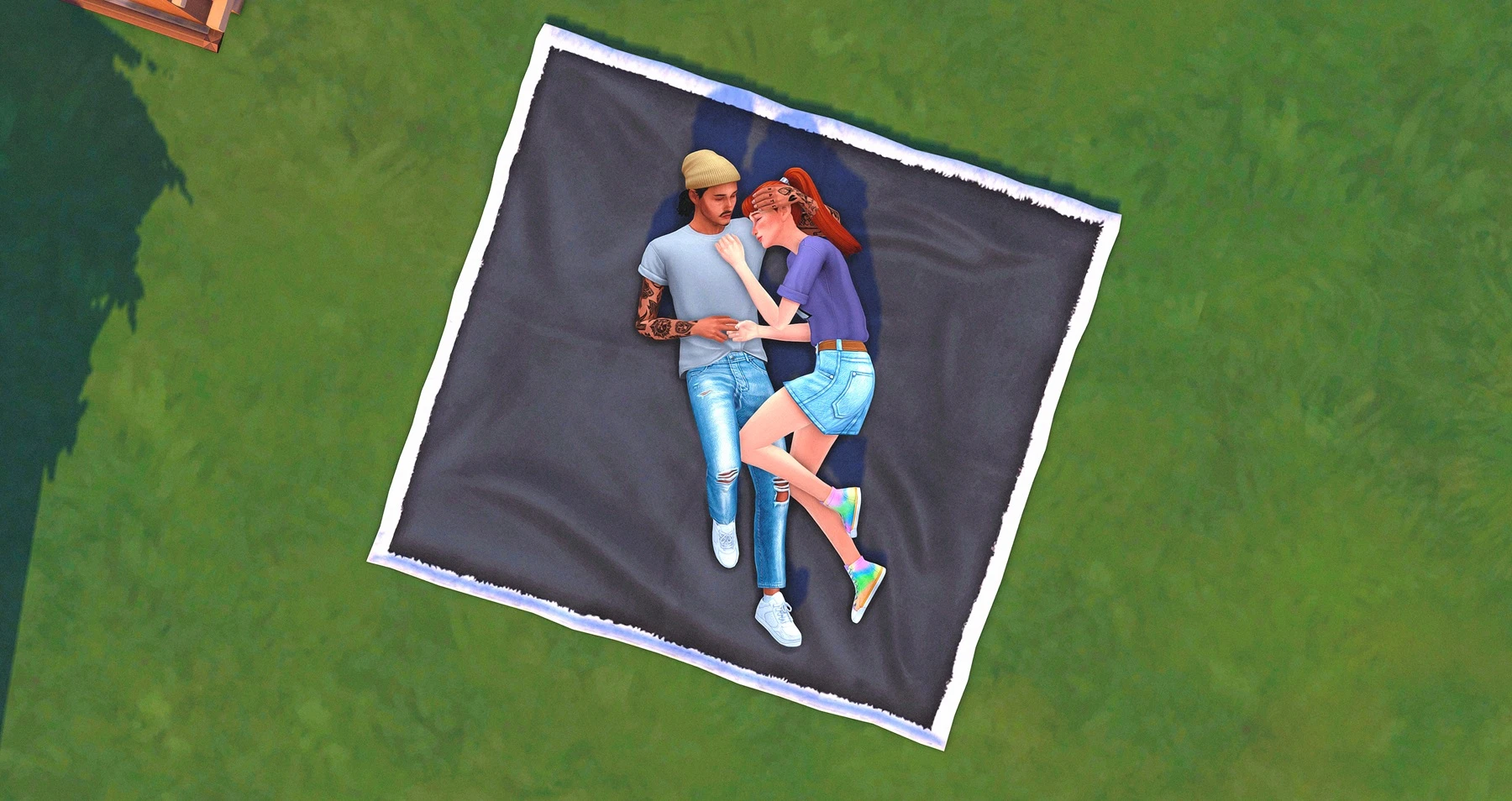
                                      2. Triangles in Composition

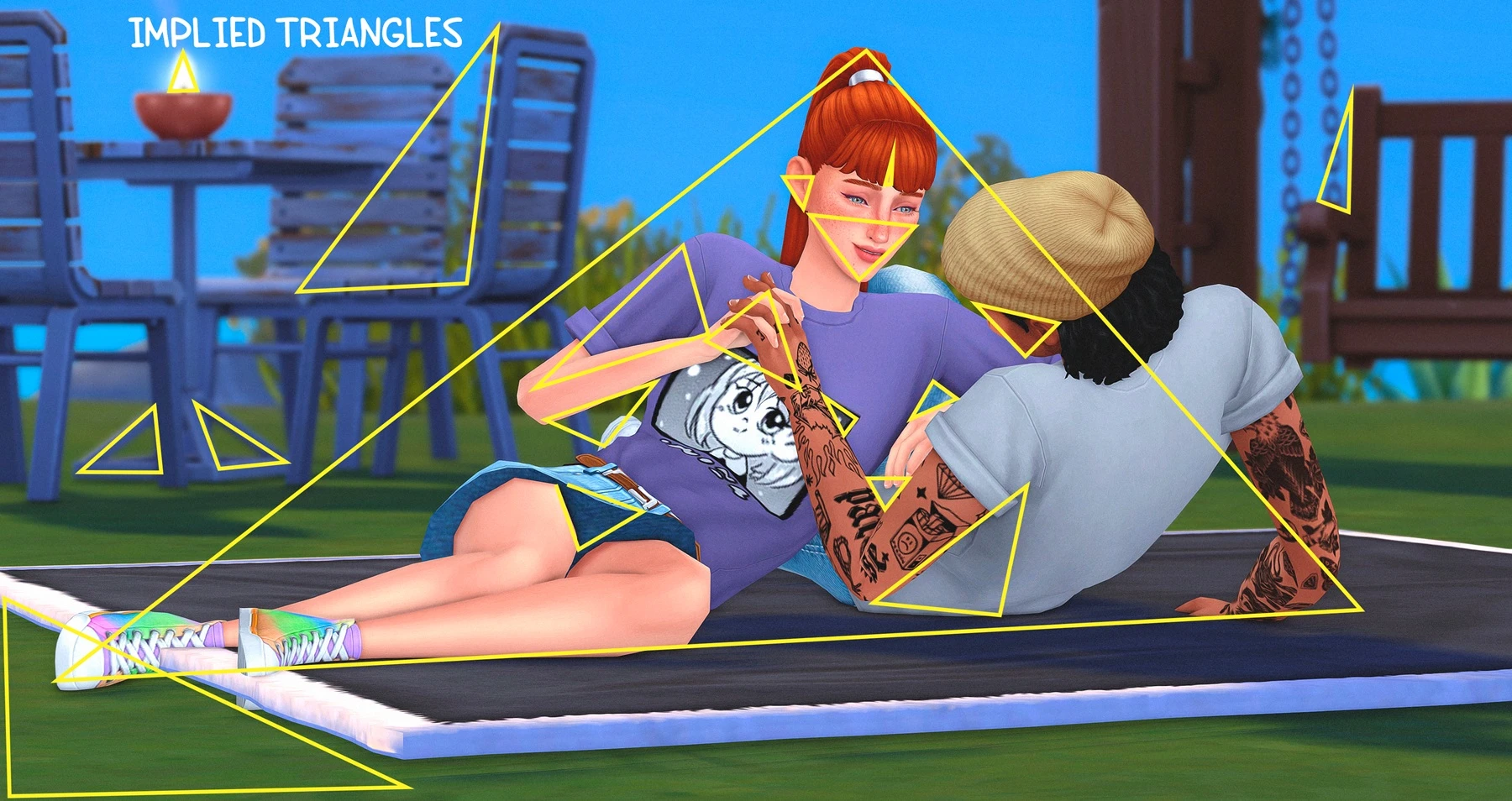
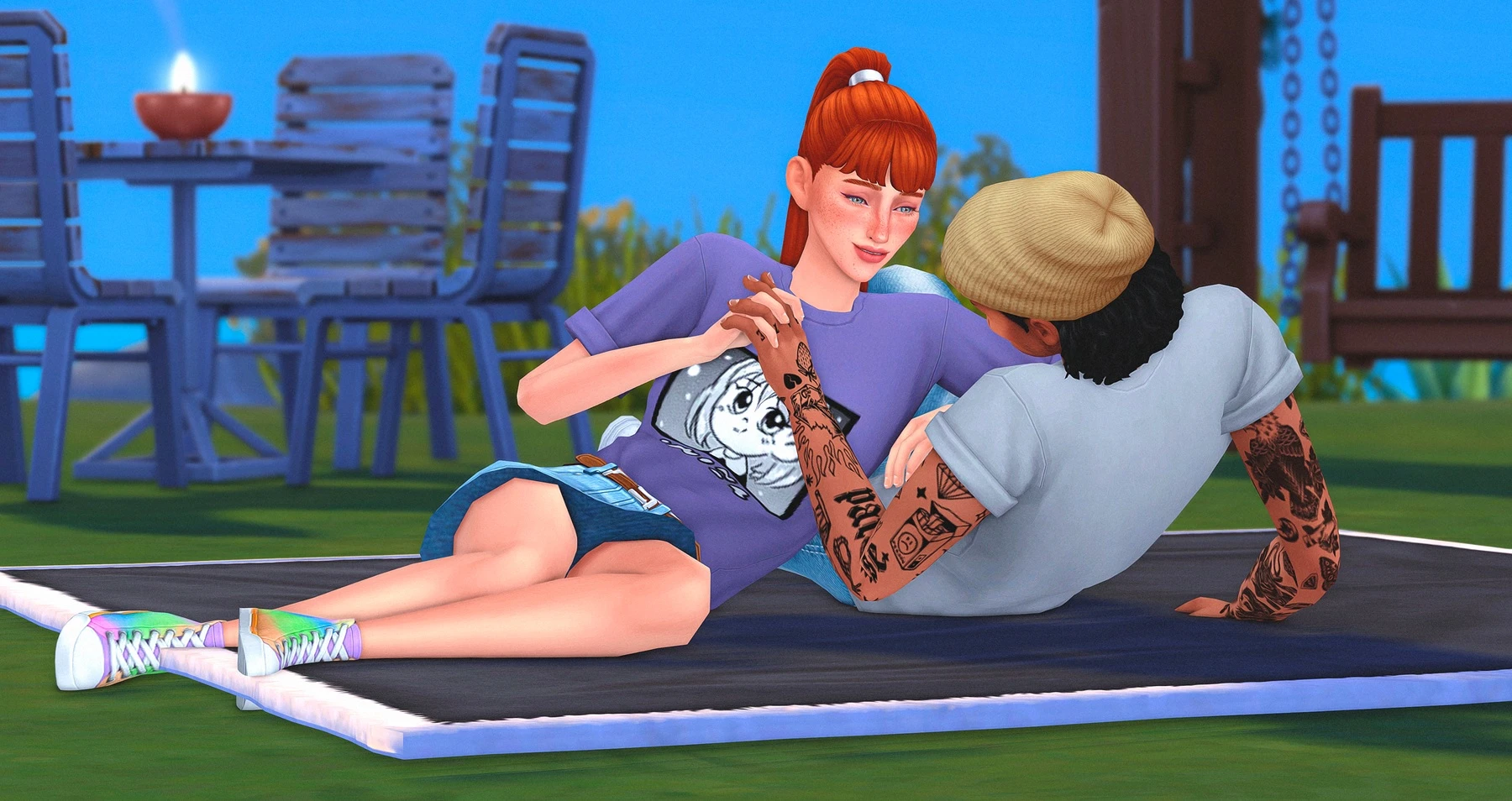
                                      Triangles are one of the most natural types of composition. Our brain perceives this structure as stable, harmonious, and visually comfortable. When objects in the frame form a triangle, the viewer's eye automatically follows along its lines and gently arrives at the right point – the character or focal point. Triangles also create a sense of depth and gather chaotic elements into a unified shape. That's why even a simple everyday moment in Sims 4 becomes more expressive and "photographic" if it has triangular composition.

                                      An example of a frame that feels harmonious.
                                      And now I'll show you why:
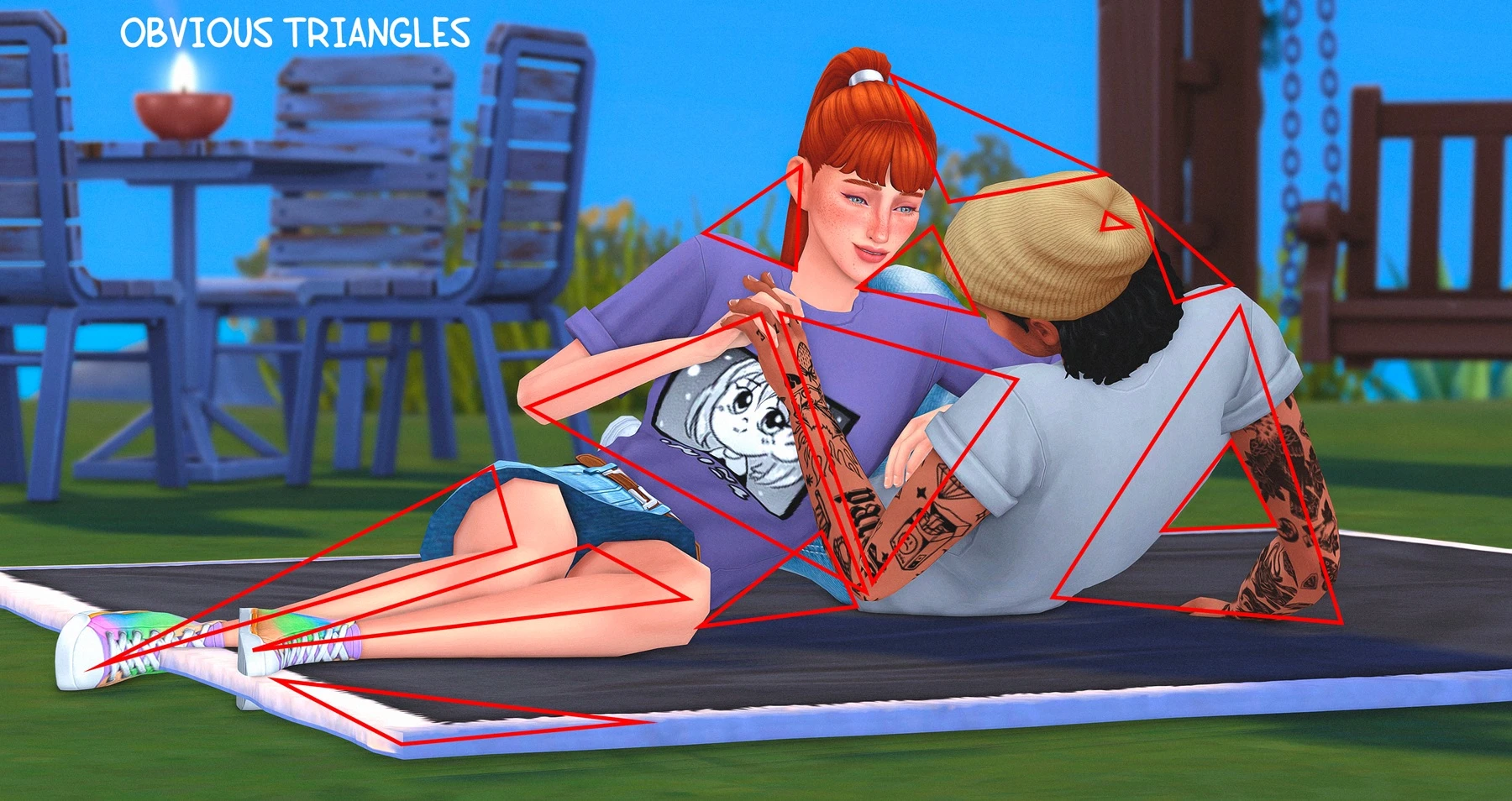
                                      How many triangles do you see?
                                      3. Leading Lines

                                      Floors, walls, furniture, windows, railings – all of these are lines that guide the viewer's eye. They can either lead to the character, strengthening the composition, or lead away, making the frame unreadable.

                                      In the example, you can see that the lines converge toward the sim and the composition immediately becomes cohesive.
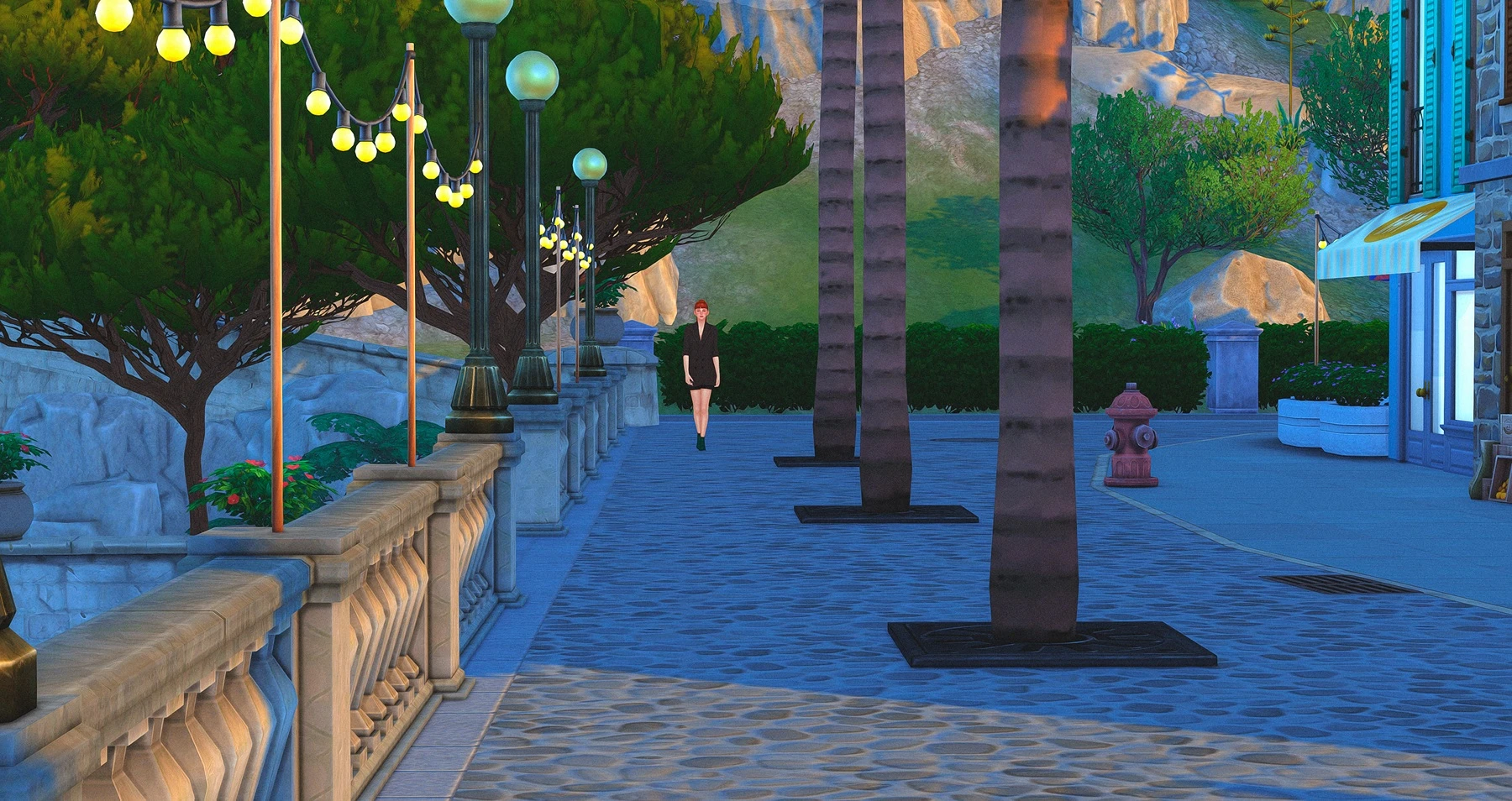
                                      If you feel that something in the frame is "off," try rotating the camera slightly – sometimes that's enough to change the direction of the lines and pull the scene together.

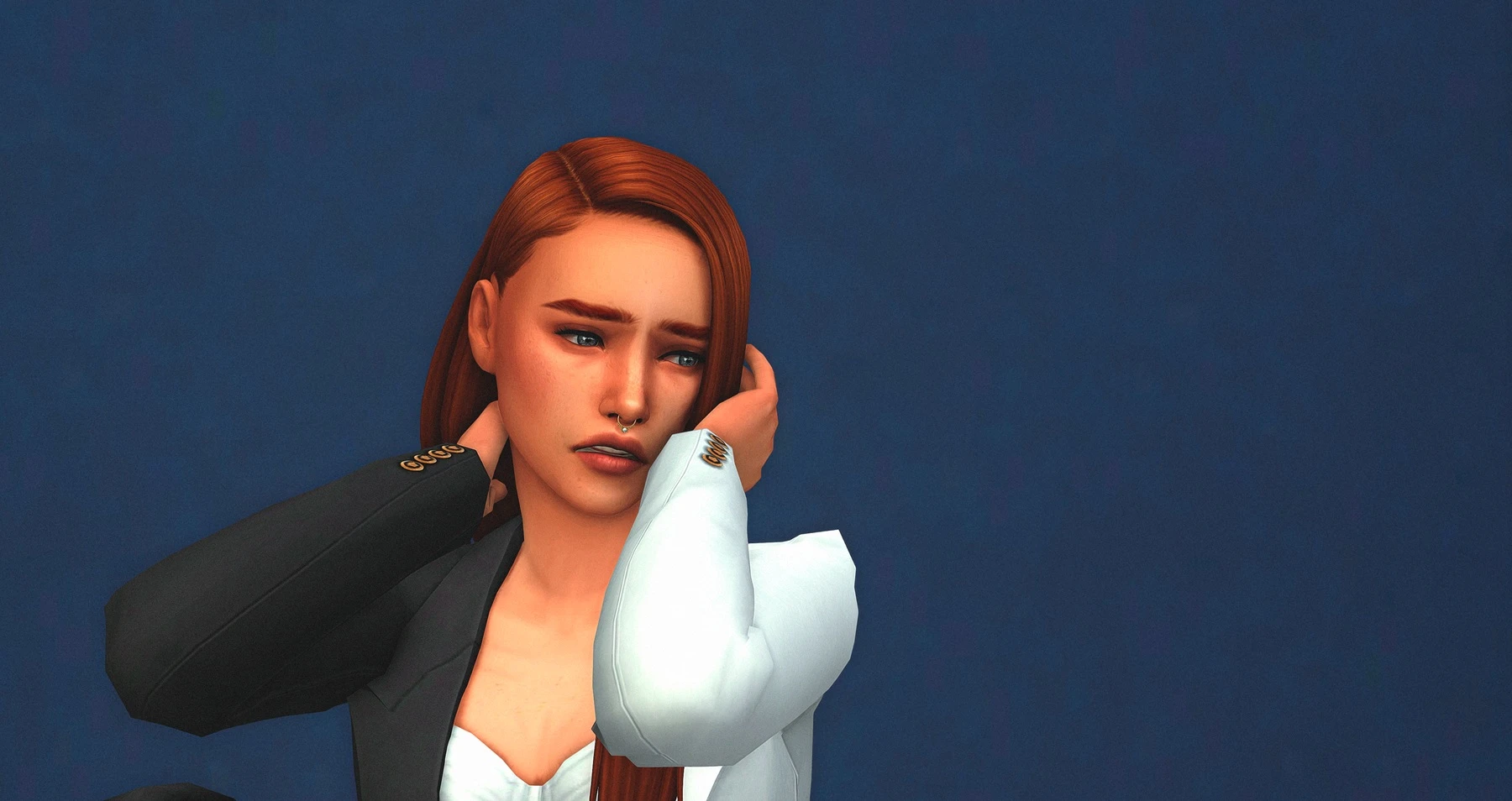
                                      4. Negative Space

                                      Negative space is the "air" around the character. It's not emptiness for emptiness's sake, it's a tool that helps convey emotion:

                                      • loneliness,
                                        • anticipation,
                                          • anxiety,
                                            • calm,
                                              • freedom,
                                                • detachment.

                                                  If there's a lot of space around the character, the scene feels more distant or tense. If the space is tight and compact, the frame becomes more intimate and softer.

                                                  The key is to use negative space consciously: how "empty" the frame should be depends on the story and emotion.
                                                  5. Compositional Clarity: When "Too Many Objects" Is a Mistake, and When It's Part of Character

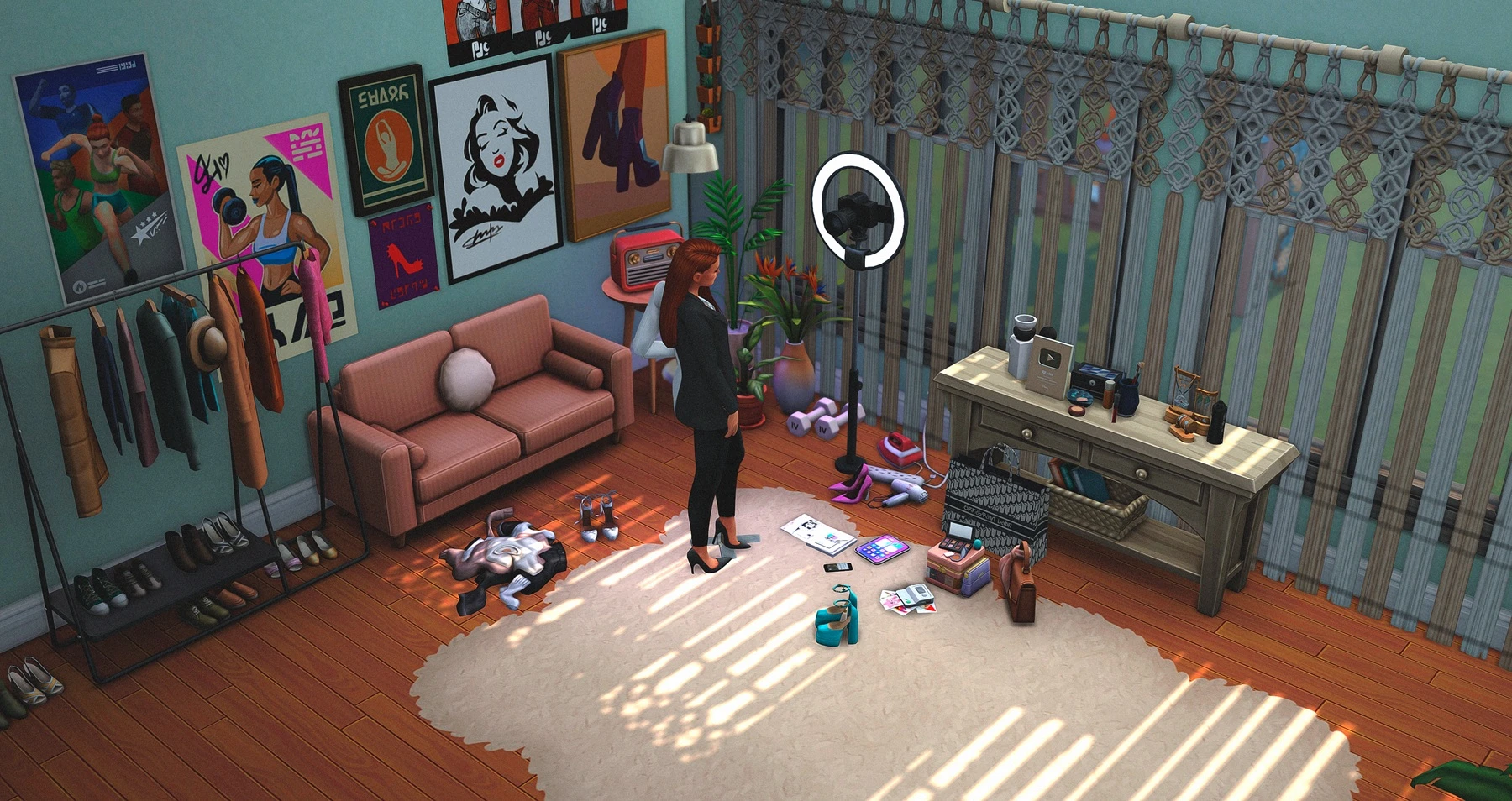
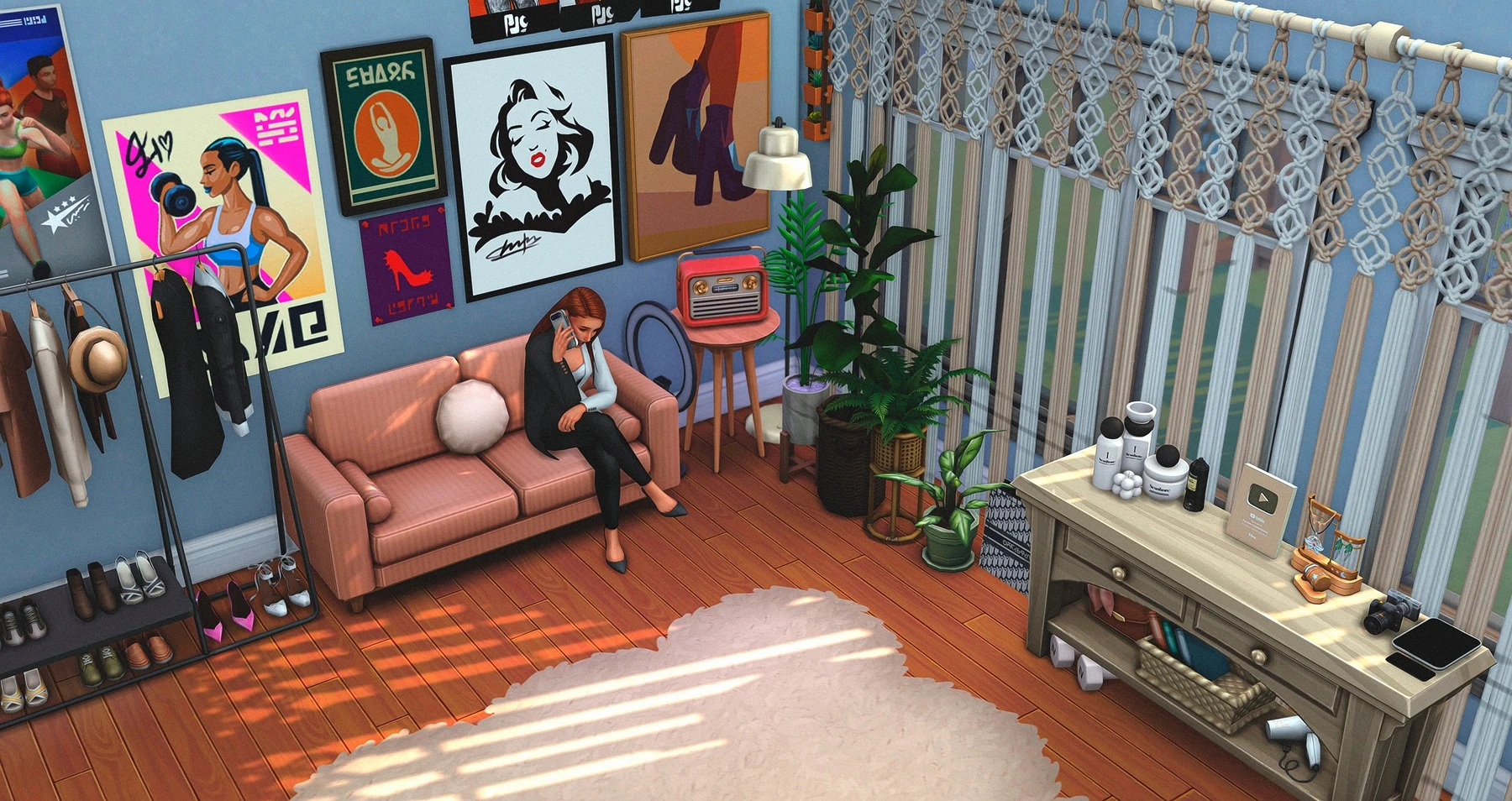
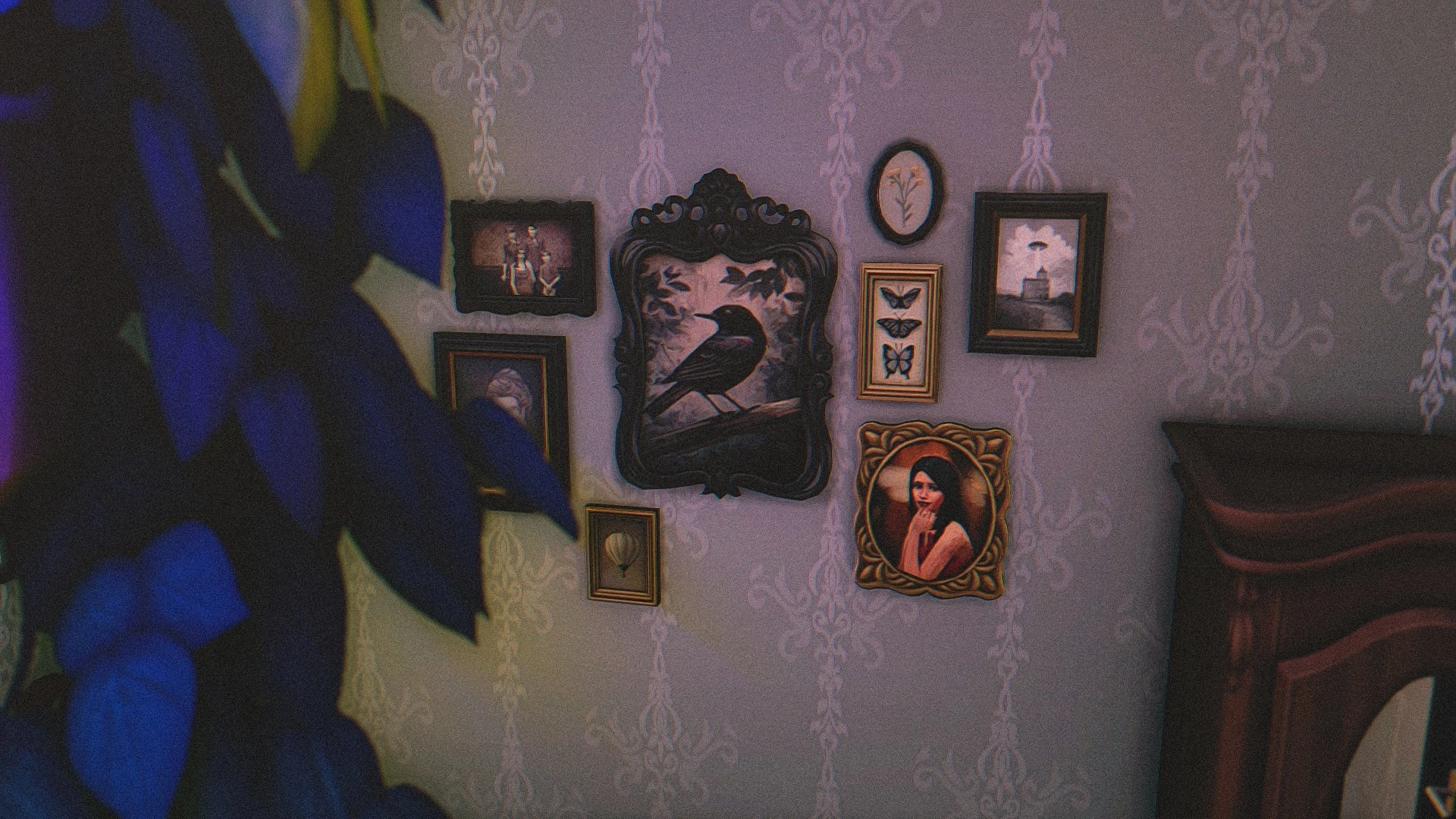
                                                  It's important to understand: clutter isn't always bad. The mistake is random chaos, when objects aren't connected to each other and create visual noise. But conscious clutter can perfectly show a character's personality and the atmosphere of their world.

                                                  The best example – a teenager's room.

                                                  Frame 1 – unconscious chaos (mistake)

                                                  Unrelated objects everywhere: food, trash, makeup, toys, random knickknacks. The desk is overloaded, posters hang without rhythm. The eye jumps around the frame, the sim "gets lost," the composition falls apart.
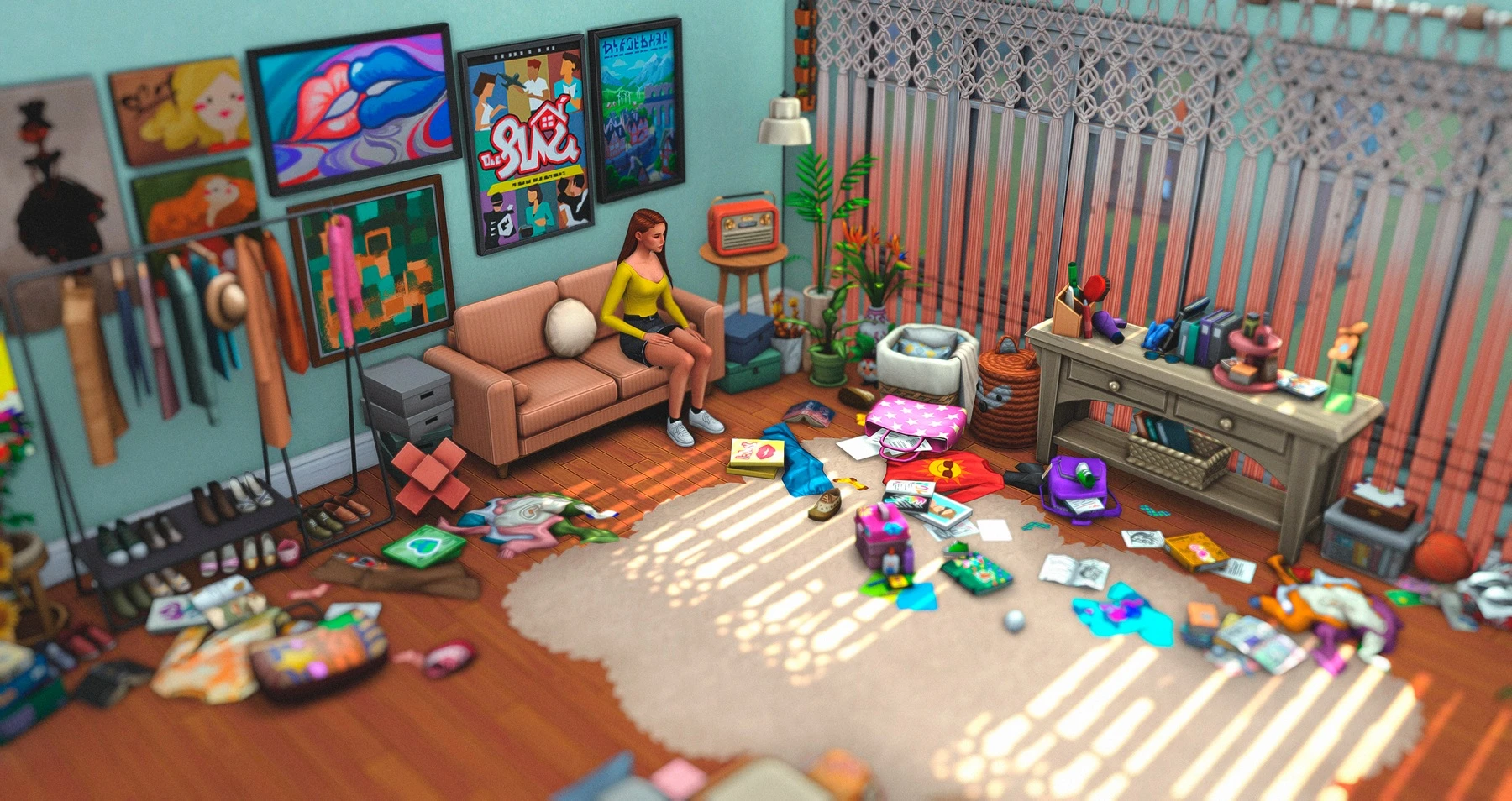
                                                  Frame 2 – conscious clutter (storytelling)

                                                  There are still lots of objects, but now they're united by the theme: sketches, markers, textbooks, headphones, posters of interests. The chaos remains, but it's meaningful. Things work for the image, show personality and mood.
                                                  Frame 3 – clean composition

                                                  Unnecessary details are removed, 1–2 focal points remain: laptop + mug, lamp, a couple of posters. The room feels calmer, the focus shifts to the character or action.
                                                  6. Capturing the Direction of Character's Gaze

                                                  The character's eyes also work as a compositional tool. The viewer almost always automatically looks where the sim is looking. If there's no space in that direction, the frame starts to "break".

                                                  Imagine two frames:

                                                  • In the first, the sim is looking toward the edge of the frame, and all the free space is behind them. The viewer's eye hits the border of the image, creating a feeling of compression and discomfort.
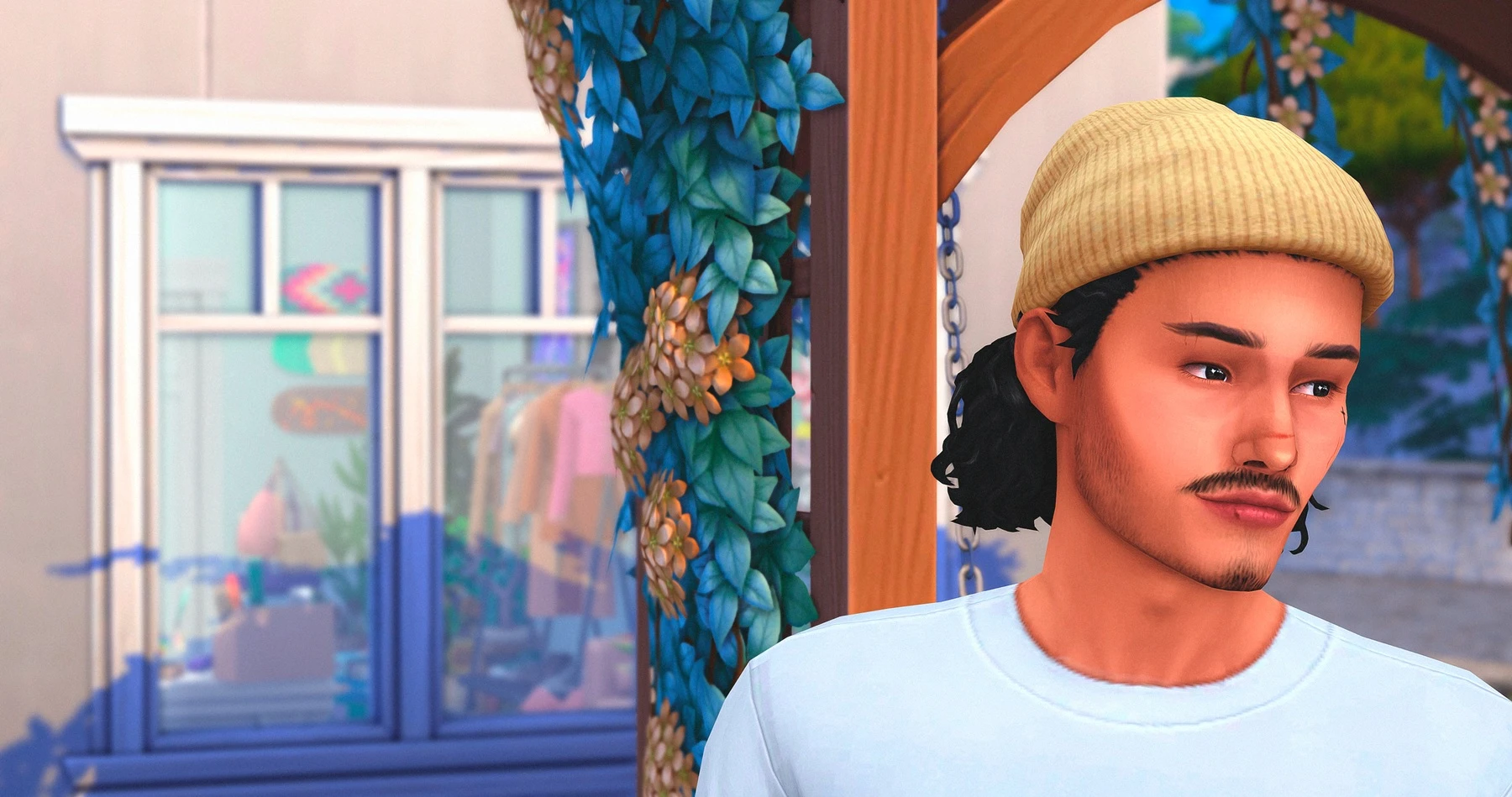
                                                    • In the second, the free space is in the direction of the gaze. The frame immediately becomes more natural: it's as if we "see" what they're thinking about, where they're looking.

                                                      This works in both static shots and scenes with movement.

                                                      Simple rule:

                                                      — If the character is looking right – leave more space on the right.

                                                      — If down – shift the frame so the "air" is below.

                                                      This way the viewer won't feel like the gaze is "hitting a wall."

                                                      7. Small Compositional Tricks That Always Work

                                                      When you start to feel composition, many things become intuitive. But there are a few simple techniques that almost never fail, especially in Sims 4.

                                                      This can be formatted as a small checklist:

                                                      • Shift the character slightly off-center.

                                                        Even a slight departure from symmetry often makes the frame livelier.

                                                        • Add one leading line.

                                                          A table, road, window edge – let at least one element help lead the eye to the character.

                                                          • Check the background behind the head.

                                                            Avoid situations where lamps, door frames, or bright spots are "growing" out of the head.

                                                            • Remove at least one unnecessary object.

                                                              If you feel the frame is overloaded, just remove one item. Often that's enough.

                                                              • Alternate tight and "airy" frames in a series.

                                                                If you have several tight, dense screenshots in a row, add the next one with more air so the viewer doesn't get tired.

                                                                These small tricks help quickly "fix" a frame when something feels off, but you can't immediately figure out what exactly.

                                                                Block Summary

                                                                Composition is the foundation of an expressive frame. It determines where the eye falls, what mood is read first, and how cohesively the scene is perceived. When you understand the principles of thirds, triangles, leading lines, negative space, and compositional clarity, even a simple moment in Sims 4 turns into a beautiful, structured, and emotional frame.

                                                                Block 4. Light and Atmosphere

                                                                Light is one of the strongest expressive tools in Sims 4. It sets the mood, creates volume, emphasizes emotion, and directs attention. The right light can turn an ordinary frame into an atmospheric scene, while the wrong light can "kill" even perfect composition.

                                                                In this block – simple principles that will help you control light consciously and use it as the language of visual storytelling.

                                                                1. Natural and Artificial Light

                                                                In Sims 4, there are two main light sources: natural (from windows, sky) and artificial (lamps, string lights, fixtures).

                                                                Natural light

                                                                • soft, realistic;
                                                                  • gives volume and clean shadows;
                                                                    • perfect for portraits, daytime scenes, and calm moments.

                                                                      Artificial light

                                                                      • more accentuated;
                                                                        • helps highlight an object in a dark room;
                                                                          • creates mood: coziness, tension, warmth, or coldness.

                                                                            2. Time of Day Immediately Changes Mood

                                                                            Sims 4 works beautifully with different times of day:

                                                                            • morning – soft, pinkish;
                                                                              • day – neutral, bright;
                                                                                • evening – warm, cozy atmosphere;
                                                                                  • night – deep, blue, dramatic.

                                                                                    This is a great tool to convey the mood of a scene without unnecessary details.

                                                                                    3. Light as Emotion (Using One Scene as Example)

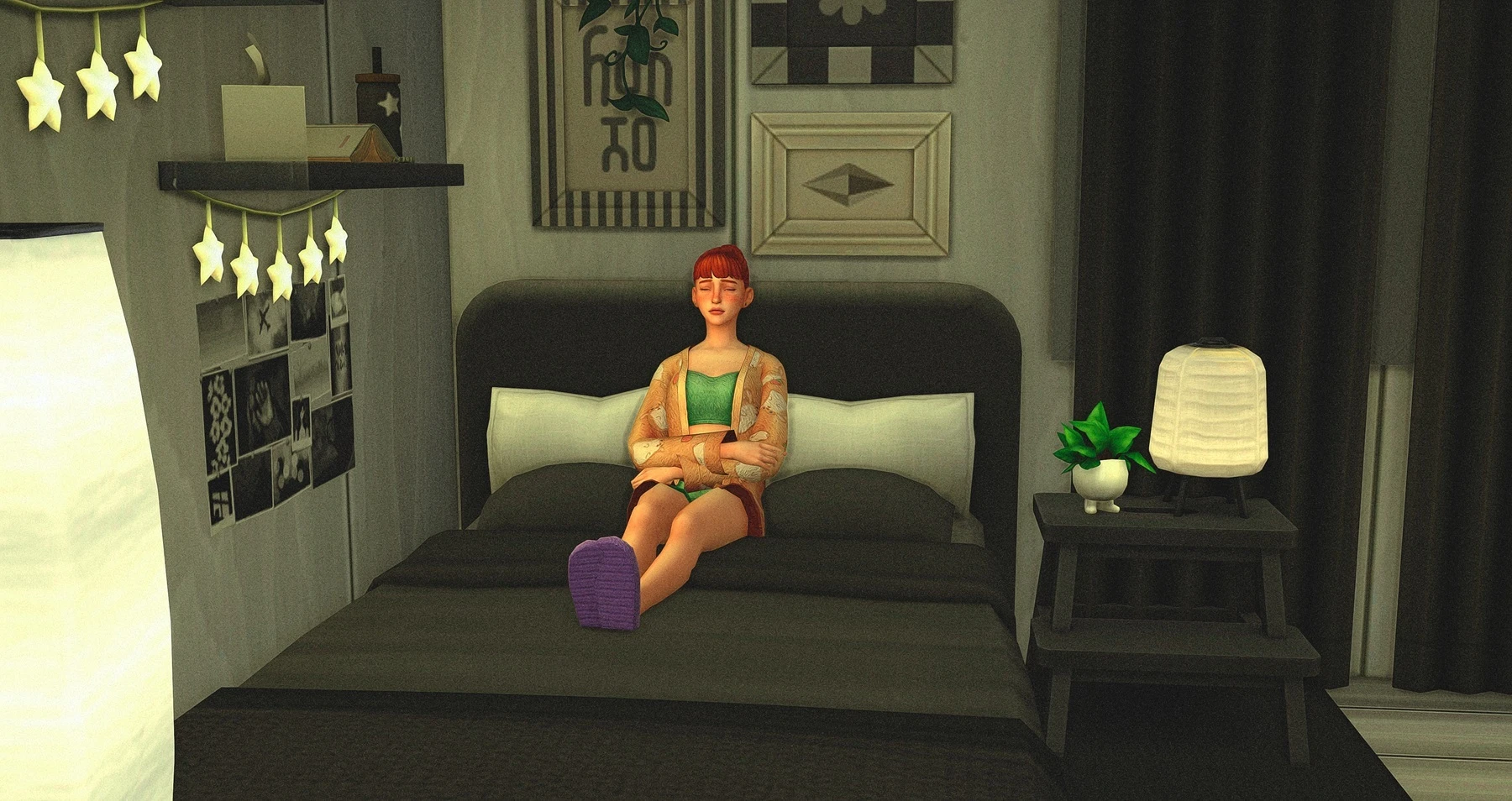
                                                                                    Light can convey emotion even more strongly than a character's facial expression. And your series of screenshots is a perfect example of how mood changes solely through lighting.

                                                                                    Even soft light – calm

                                                                                    The room is lit with overall soft light. There's almost no shadow, the space looks even and neutral. The character's emotion reads calmly, without drama – it's a simple, everyday moment.
                                                                                    Directional accent – inner emotion

                                                                                    Light falls on the character from the side, the rest of the room drowns in shadows. This creates drama, amplifies the feeling of experience or contemplation.
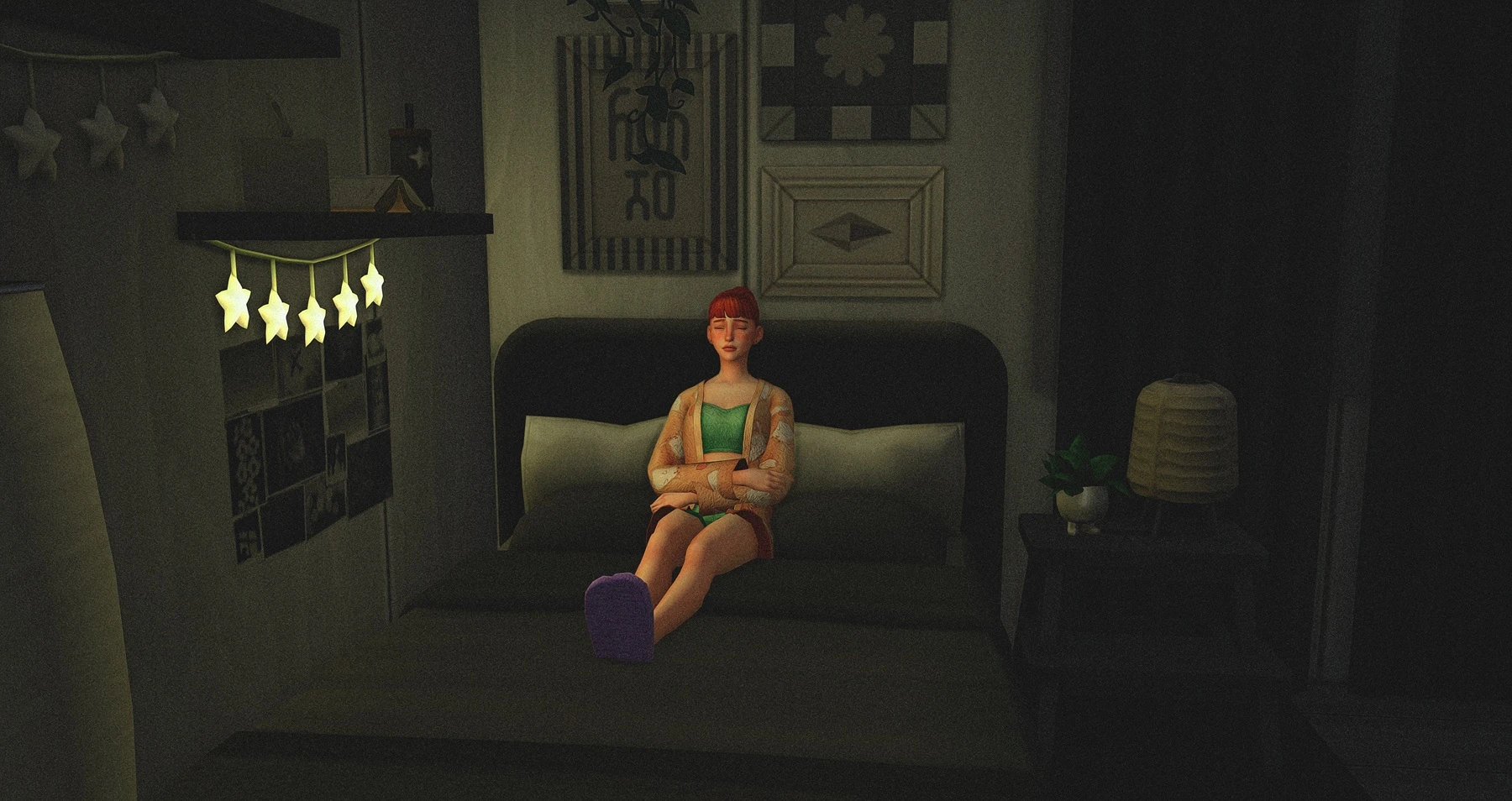
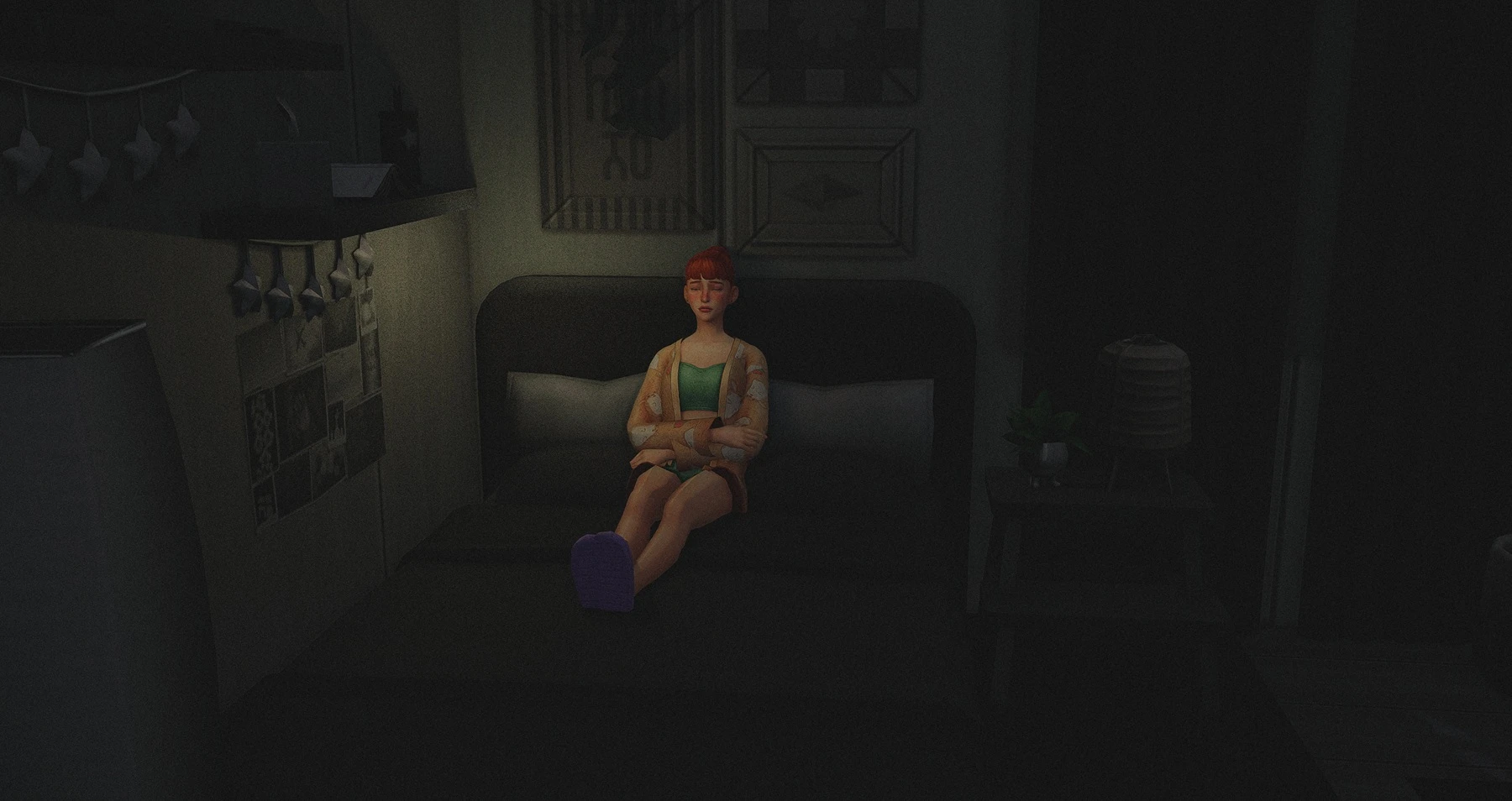
                                                                                    Almost complete darkness – loneliness and silence

                                                                                    Minimal light, barely readable details. The room looks empty, slightly cold, the atmosphere tense and closed off. This kind of light works perfectly for nighttime, emotionally heavy scenes.
                                                                                    Mini Light Tricks That Always Work

                                                                                    • Place the character near a window – always beautiful.
                                                                                      • Don't use overhead light as the only source – it makes the image flat.
                                                                                        • Mix warm and cold light – creates a cinematic atmosphere.
                                                                                          • Light what matters, you can leave the rest in the shadows.

                                                                                            Light is one of the simplest yet most powerful tools in Sims 4. It sets the mood, creates volume, and directs the eye. By changing the source, direction, or softness of light, you can completely change the atmosphere of a scene – from calm to dramatic.

                                                                                            Understanding how natural and artificial light works, time of day, and local accents helps not just "illuminate" the frame, but create mood consciously. Light is what makes a screenshot alive.

                                                                                            Block 5. Visual Rhythm and Shot Variety

                                                                                            When you're creating a story or legacy, it's important not only that each individual frame is strong, but also how they work together. Strong stories in Sims 4 are built on visual rhythm: alternating shots, angles, emotions, and details. This is what makes a collection of screenshots lively rather than monotonous.

                                                                                            1. Alternating Shots – The Foundation of Visual Rhythm

                                                                                            Use different shots to make the story look dynamic:

                                                                                            • Wide shot – shows the space and introduces the scene.
                                                                                              • Medium – develops the action.
                                                                                                • Close-up – conveys emotion.
                                                                                                  • Macro – amplifies the focus (details, hands, objects).

                                                                                                    Even a simple everyday scene starts to "breathe" if you vary the shots, rather than shooting everything the same way.

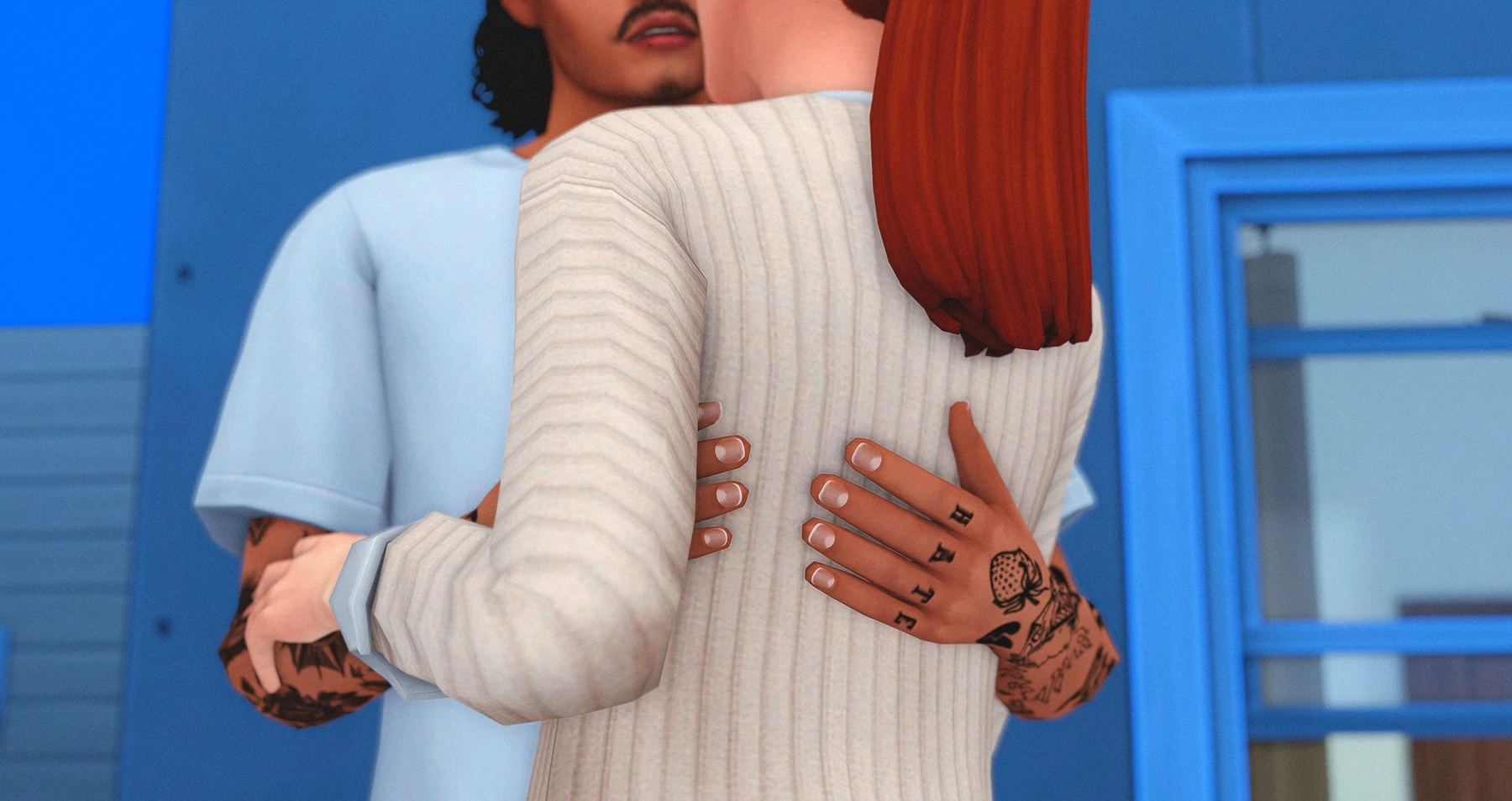
                                                                                                    Screenshot example:

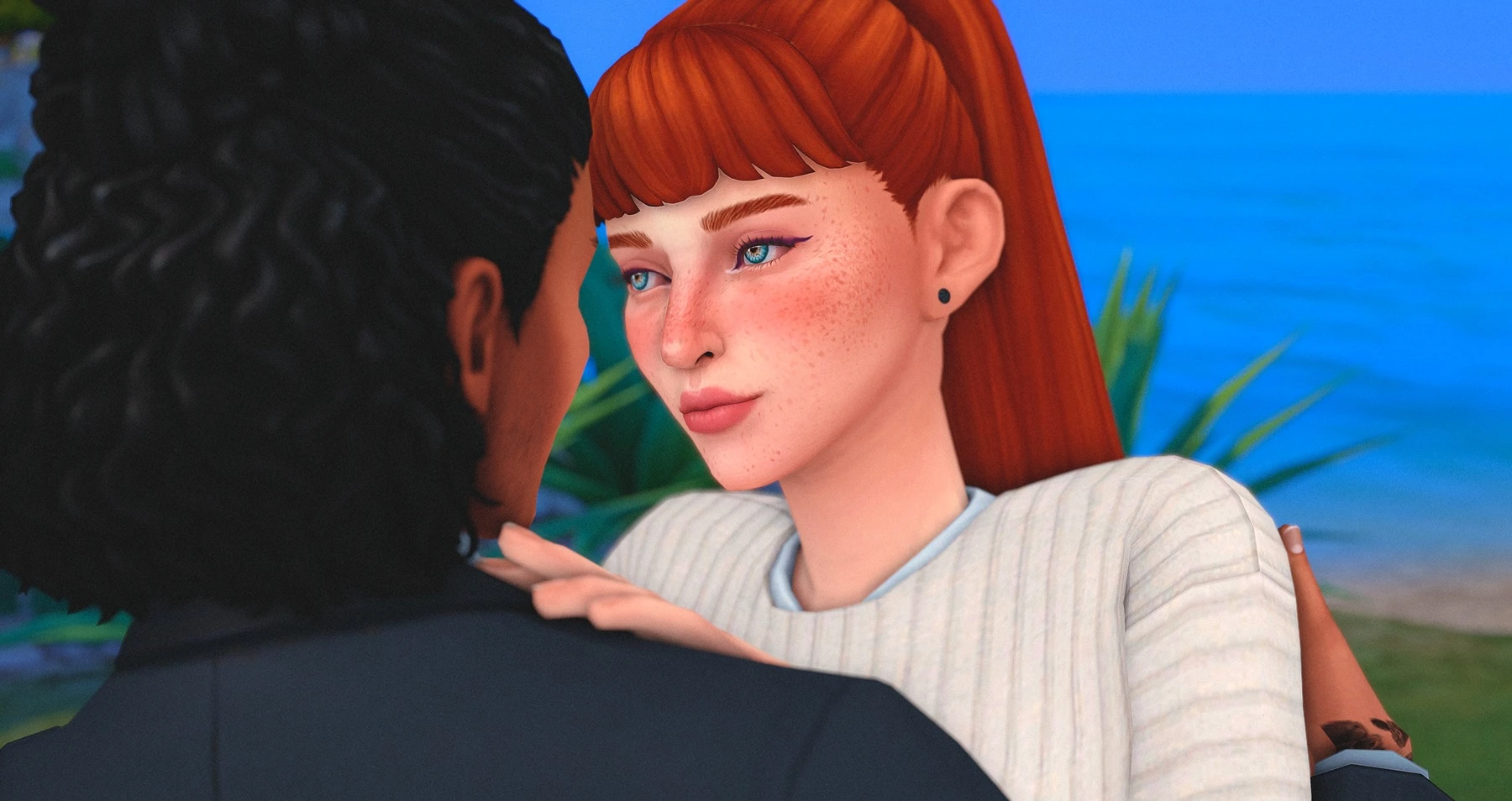
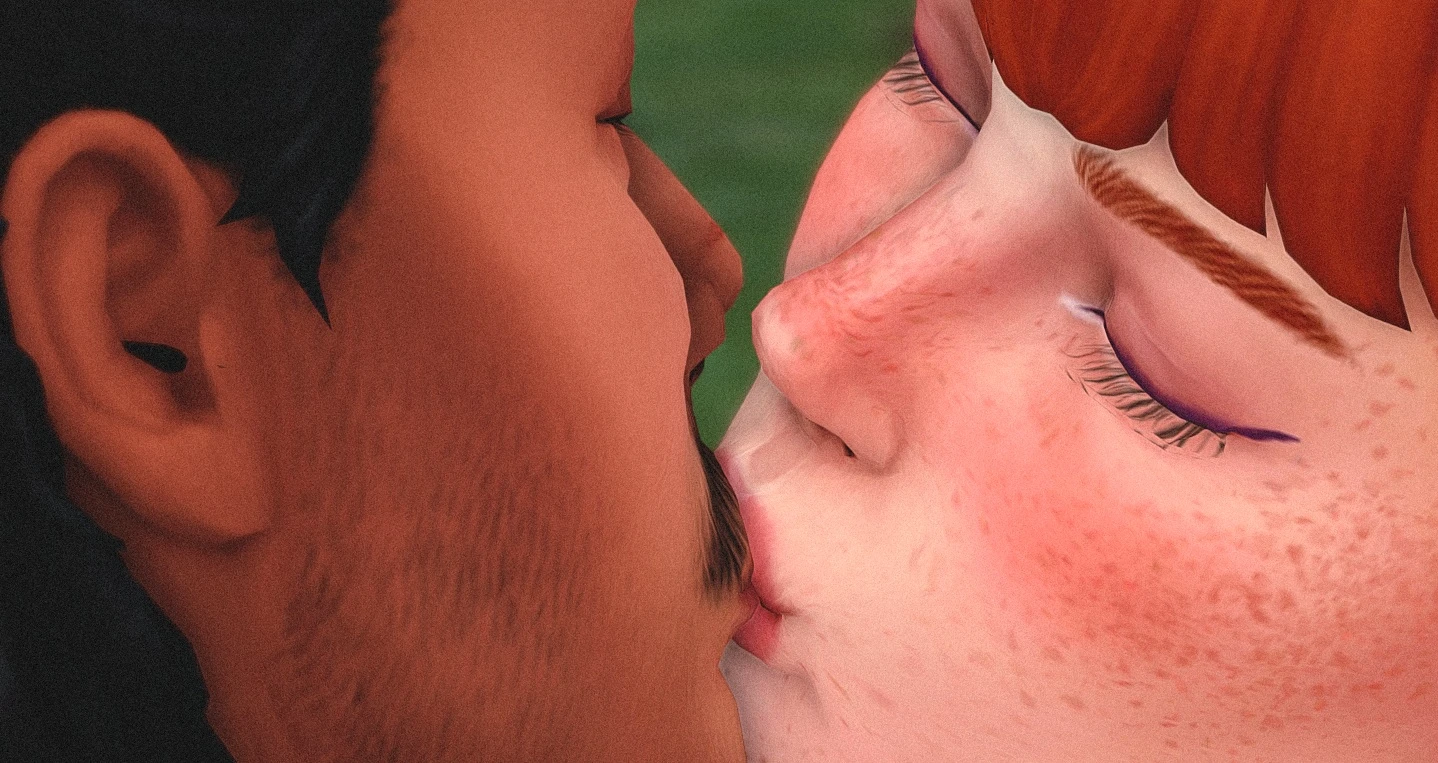
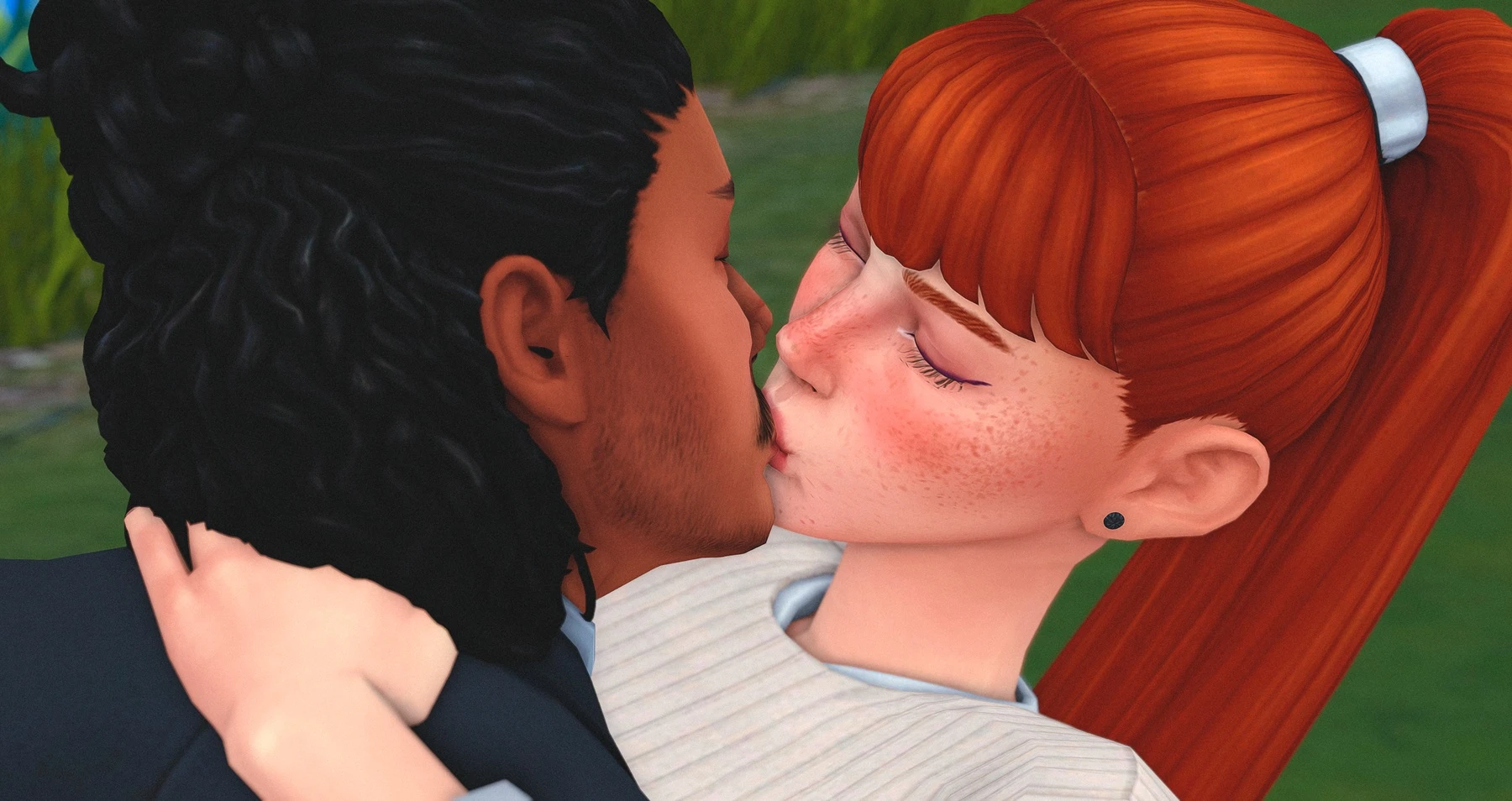
                                                                                                    Kiss scene: wide → medium → close-up → macro (very close kiss).
                                                                                                    2. Angles: Change the Angle—Change the Feeling

                                                                                                    One and the same moment can feel completely different if you change the angle:

                                                                                                    • Frontal – neutral.
                                                                                                      • Diagonal – dynamic.
                                                                                                        • Over the shoulder – effect of presence.
                                                                                                          • Low angle – strength.
                                                                                                            • High angle – vulnerability.

                                                                                                              By alternating angles, you create movement even in a static scene.

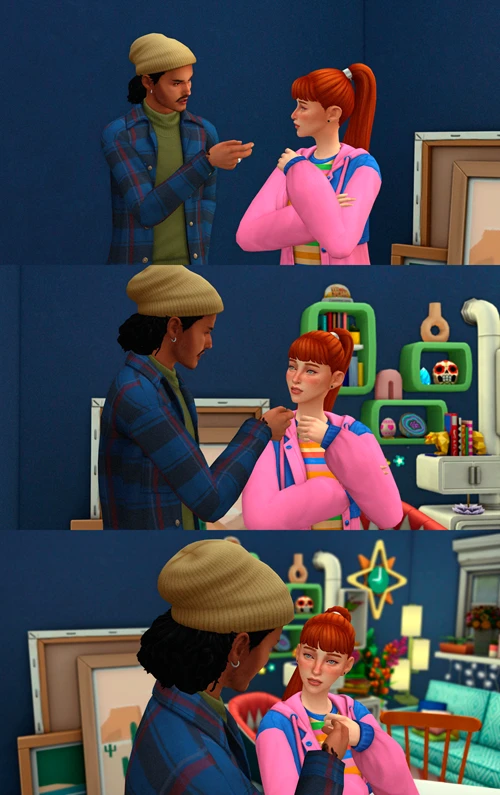
                                                                                                              Screenshot example:

                                                                                                              Dialogue between sims: frontal → shifted → over the shoulder.
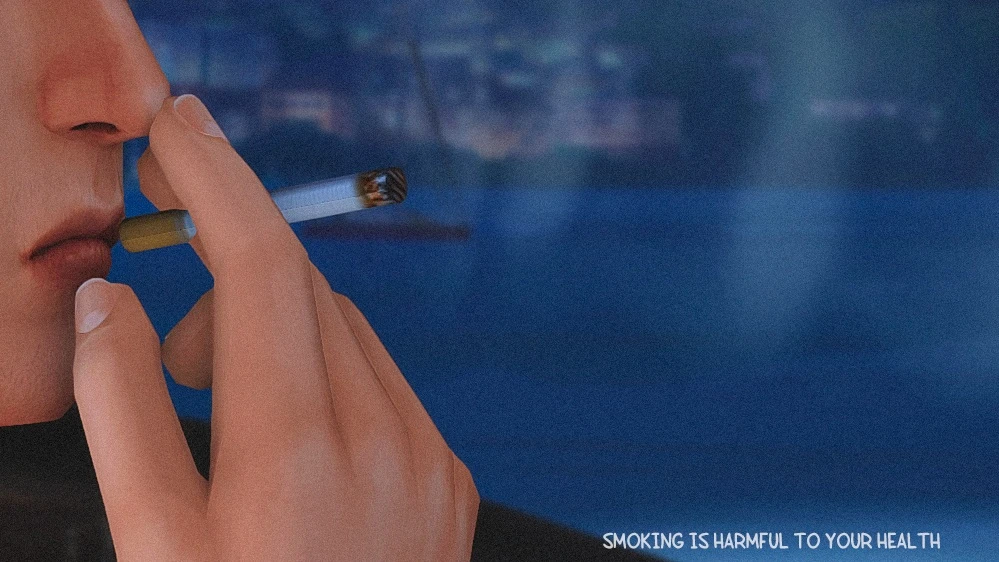
                                                                                                              3. Emotions in Close-Up

                                                                                                              Sometimes you need to literally come closer.

                                                                                                              Close-ups allow you to see:

                                                                                                              • the expression in the eyes,
                                                                                                                • trembling lips,
                                                                                                                  • tension in the hands,
                                                                                                                    • subtle details that carry meaning.

                                                                                                                      This makes the scene deeper and more emotional.

                                                                                                                      Screenshot example:

                                                                                                                      macro detail – lips, hands.
                                                                                                                      4. Details as Rhythmic "Pauses"

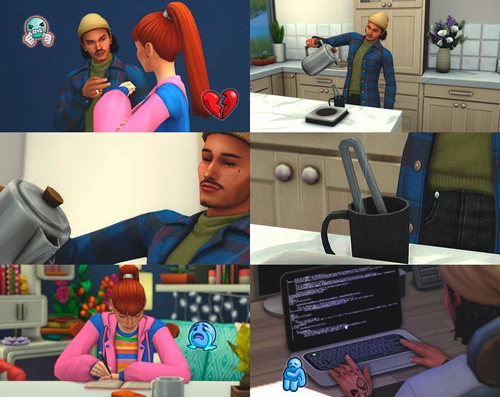
                                                                                                                      In a series of frames, it's important to let the viewer "breathe."

                                                                                                                      A detail shot:

                                                                                                                      • a mug,
                                                                                                                        • a note,
                                                                                                                          • light,
                                                                                                                            • a hand,
                                                                                                                              • an object in the background.

                                                                                                                                – works as a pause between dense emotional scenes.

                                                                                                                                Screenshot example:

                                                                                                                                Characters argue → Sim makes tea → macro on teapot or hands, mug - a perfect "breathing" frame between emotions → then sims go about their business
                                                                                                                                Mini-Scheme for Storytelling

                                                                                                                                Simple template for any scenes:

                                                                                                                                1) Establishing shot (wide)

                                                                                                                                2) Development (medium)

                                                                                                                                3) Emotion (close-up)

                                                                                                                                4) Accent (detail)

                                                                                                                                5) Wrap-up or scene change (wide or dynamic)

                                                                                                                                Block 5 Summary

                                                                                                                                Visual rhythm is alternation. When shots, angles, and accents change meaningfully, frames start working together. The story becomes lively and emotional, even if the action in it is minimal.

                                                                                                                                Block 6. Formats and Platforms: How to Frame for Social Media

                                                                                                                                In Sims 4, you can create a beautiful frame, but on social media it can lose its impact if the crop format works against the composition. Proper framing helps preserve the emotion, focus, and clarity of the scene on any platform.

                                                                                                                                Here are the three most popular formats that are convenient to use:

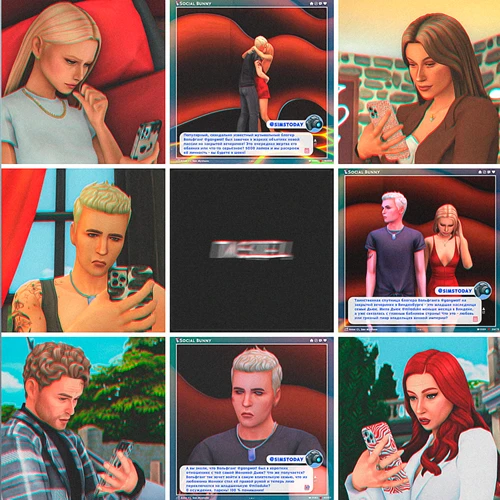
                                                                                                                                1. Format 1:1 (Square)

                                                                                                                                Where it's used: Instagram, Tumblr.

                                                                                                                                Why it works: the square is stable and visually "calm." It looks great in grids, collections, and collages.

                                                                                                                                When to choose 1:1:

                                                                                                                                • if you want to firmly hold attention on the character,
                                                                                                                                  • if there's a lot of clutter around, the square helps "cut the noise,"
                                                                                                                                    • if you're making a collection of 9 frames, the grid looks perfectly even.
                                                                                                                                      2. Format 4:5 (Vertical/Portrait)

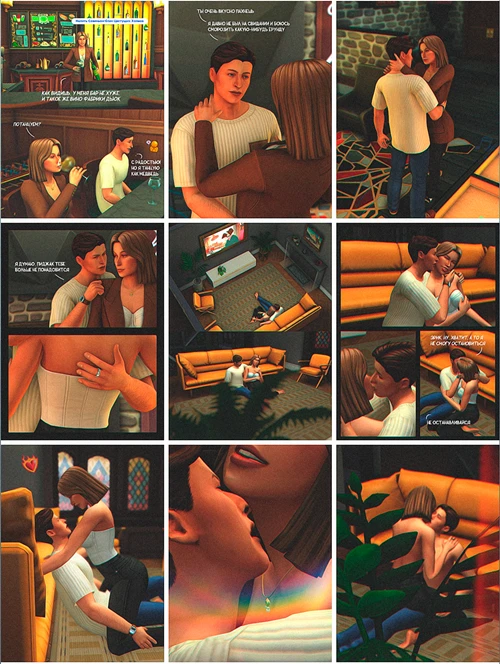
                                                                                                                                      Where it's used: Instagram, Tumblr.

                                                                                                                                      Why it works: this is the most advantageous format for vertical platforms – it takes up more screen space, which means it holds attention better.

                                                                                                                                      When to choose 4:5:

                                                                                                                                      • close-ups, emotions, portraits, whenever you want,
                                                                                                                                        • action moments,
                                                                                                                                          • scenes where the vertical is important (doors, windows, corridors, character height).
                                                                                                                                            3. Format 16:9 (Wide Cinematic)

                                                                                                                                            Where it's used: Tumblr, websites, blogs.

                                                                                                                                            Why it works: this is the film format. It makes the scene a wider story, gives scale and space.

                                                                                                                                            When to choose 16:9:

                                                                                                                                            • walks,
                                                                                                                                              • landscapes, interiors,
                                                                                                                                                • scenes with leading lines,
                                                                                                                                                  • frames where the atmosphere is important.
                                                                                                                                                    Personal Experience

                                                                                                                                                    Personally, I went a different route and started framing in my Telegram in 9:16 format, meaning story format. This isn't the most common option for legacies, but it seemed more convenient to me:

                                                                                                                                                    • in 9:16, characters look more expressive,
                                                                                                                                                      • frames take up more space on the phone screen,
                                                                                                                                                        • vertical composition turns out more dynamic,
                                                                                                                                                          • this format became part of my own visual style, even if sometimes I go beyond the "perfect 9 frames."
                                                                                                                                                            So formats aren't strict rules, they're tools. You can follow the classics, or you can choose like me an option that better conveys your story.

                                                                                                                                                            Block 7. Small Mistakes That Ruin Even Good Screenshots

                                                                                                                                                            Even when composition, light, and angle are already on point, there are several little things that can spoil the perception of a series. These mistakes aren't critical, but they break the dynamics, rhythm, and "readability" of the story.

                                                                                                                                                            Here are the most common ones.

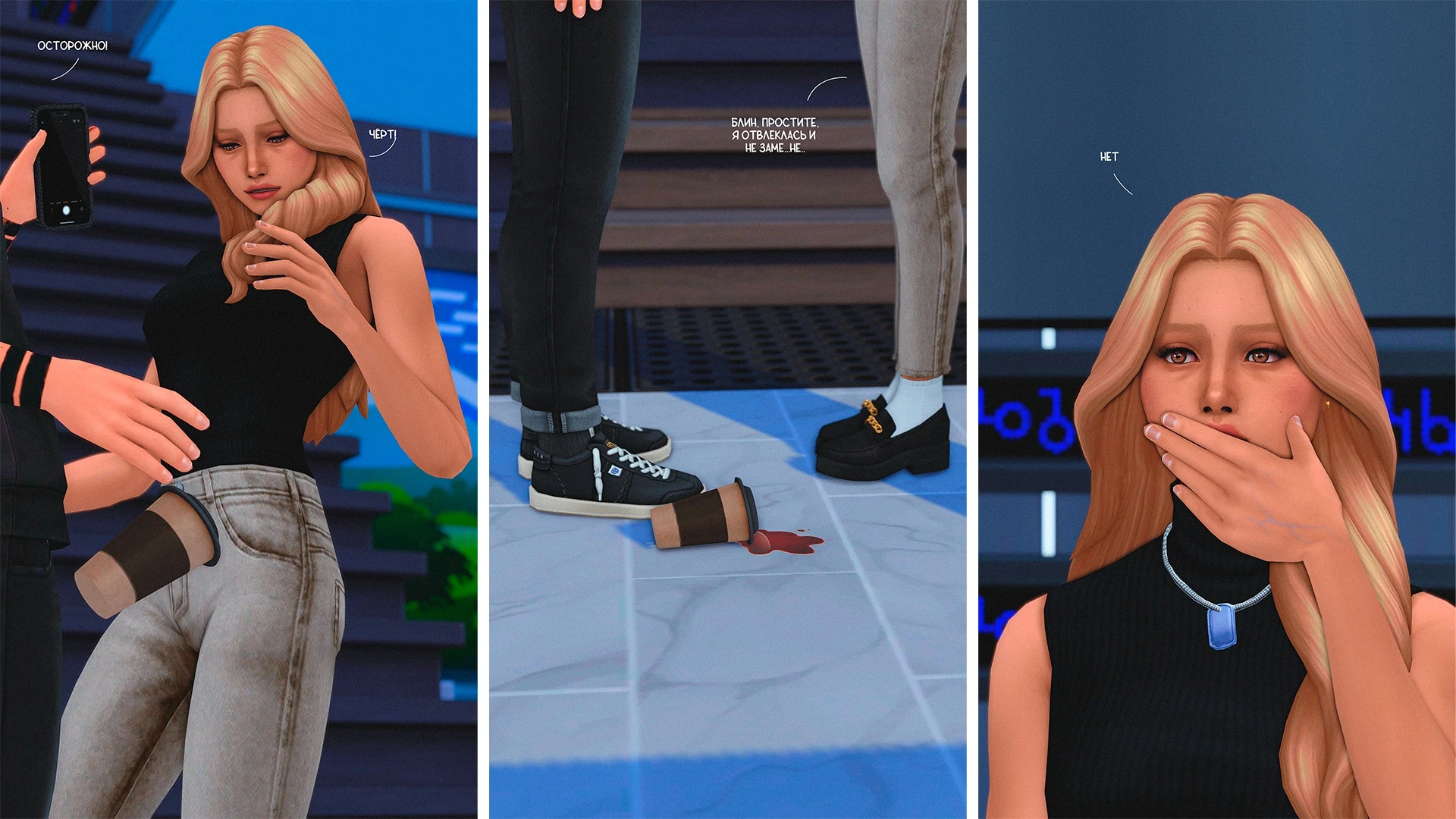
                                                                                                                                                            1. Repetitive Angle – Characters Look Like They're Standing in Line

                                                                                                                                                            Like in the example (first collage): every frame is shot from the same angle, characters are turned the same way, and the series turns into a static "line."

                                                                                                                                                            Why this is bad: the eye gets bored, there's no movement, the story lacks air.

                                                                                                                                                            How to fix it: change

                                                                                                                                                            • camera height,
                                                                                                                                                              • angle,
                                                                                                                                                                • side,
                                                                                                                                                                  • closeness,
                                                                                                                                                                    • character's position in the frame.

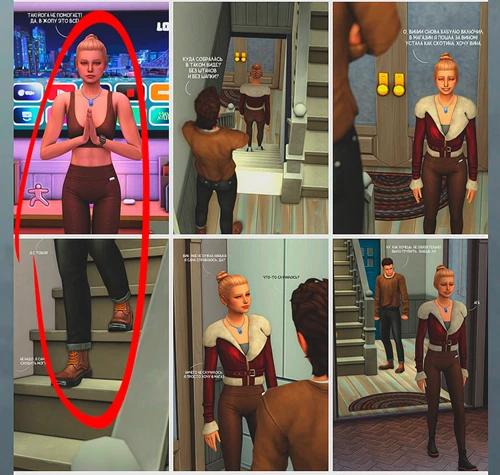
                                                                                                                                                                      2. "Stitching" Frames – Frame Elements Create a False Connection

                                                                                                                                                                      Like in the second example (legs + overhead frame): the top and bottom frames matched along the body line, and it creates the feeling that this is the same scene, but with a mistake.

                                                                                                                                                                      Why this is bad: it creates a feeling of visual "defect," the viewer gets confused.

                                                                                                                                                                      How to fix it:

                                                                                                                                                                      • don't place similar angles one under another;
                                                                                                                                                                        • shift the composition;
                                                                                                                                                                          • change the shot (for example, top – wide, bottom – close-up).
                                                                                                                                                                            Other Common Mistakes:

                                                                                                                                                                            3. Mirror Repetition of Poses

                                                                                                                                                                            When a character stands the same way twice in a row: arms, pose, head tilt repeat, only the background changes.

                                                                                                                                                                            Effect: feeling of copy-paste, the series loses liveliness.

                                                                                                                                                                            How to fix it: change the micro-pose – head tilt, body turn, hand position.

                                                                                                                                                                            4. Too Much Center – When Every Frame Is "Centered"

                                                                                                                                                                            This mistake is especially noticeable in portraits and conversations: all characters are glued to the center of the frame.

                                                                                                                                                                            Effect: dynamics disappear, the series becomes flat and predictable.

                                                                                                                                                                            How to fix it: alternate

                                                                                                                                                                            • center,
                                                                                                                                                                              • rule of thirds,
                                                                                                                                                                                • shift left/right,
                                                                                                                                                                                  • "over the shoulder" frames.

                                                                                                                                                                                    5. Competing Focal Points

                                                                                                                                                                                    When there are two bright objects in the frame (for example, character + lamp, plant, window) that pull attention equally.

                                                                                                                                                                                    Effect: the eye "splinters", emotion is lost.

                                                                                                                                                                                    Promo: Create your Sims family tree

                                                                                                                                                                                    How to fix it: either darken the background, or blur with DOF, or remove the bright object.

                                                                                                                                                                                    6. Too Many Wide Shots in a Row

                                                                                                                                                                                    If the entire series is only wide shots, the viewer stops feeling emotions.

                                                                                                                                                                                    Effect: the story becomes "documentary," but not emotional.

                                                                                                                                                                                    How to fix it: add even 1–2 close-ups or details, and the series will come alive.

                                                                                                                                                                                    7. Too Heavy DOF (Blur)

                                                                                                                                                                                    A mistake often made with reshade/gshade: the background blurs so strongly that it looks like plasticine, and the character looks like a sticker.

                                                                                                                                                                                    Effect: fakeness, loss of atmosphere.

                                                                                                                                                                                    How to fix it: reduce DOF by 20-40% to preserve depth.

                                                                                                                                                                                    8. Uneven Light Within One Series

                                                                                                                                                                                    For example: one frame is warm, another is cold, a third is high-contrast.

                                                                                                                                                                                    If the plot doesn't justify this, the series looks disconnected.

                                                                                                                                                                                    How to fix it: maintain a consistent light style at least within one scene.

                                                                                                                                                                                    9. "Empty" Frames Without Meaning

                                                                                                                                                                                    Sometimes a player thinks: "Let it be there, for the count." But if the scene doesn't add anything – neither emotion nor action – it breaks the rhythm.

                                                                                                                                                                                    Advice: if you're doubting – better throw it out.

                                                                                                                                                                                    10. Random Ugly Details

                                                                                                                                                                                    This is the smallest but important point.

                                                                                                                                                                                    For example:

                                                                                                                                                                                    • a crooked hanging frame,
                                                                                                                                                                                      • a trash can in the corner,
                                                                                                                                                                                        • an ugly NPC in the distance,
                                                                                                                                                                                          • a lamp shadow across the face,
                                                                                                                                                                                            • an object sticking out from behind the camera.

                                                                                                                                                                                              These little things are unnoticeable during shooting, but really stand out in the post.

                                                                                                                                                                                              How to fix it: glance at the frame after shooting and adjust the scene a bit.

                                                                                                                                                                                              The Biggest Mistake: Not Trying or Giving Up.

                                                                                                                                                                                              It's better to try and do than not try and not do. Everything comes with experience.

                                                                                                                                                                                              Sometimes it's better to do it "wrong" and enjoy the gameplay session than to stress over screenshots and angles and not do anything at all.


                                                                                                                                                                                              I wish your screenshots get better every time!

                                                                                                                                                                                              With love, your Nana
                                                                                                                                                                                              In the next part, we'll cover how to edit screenshots
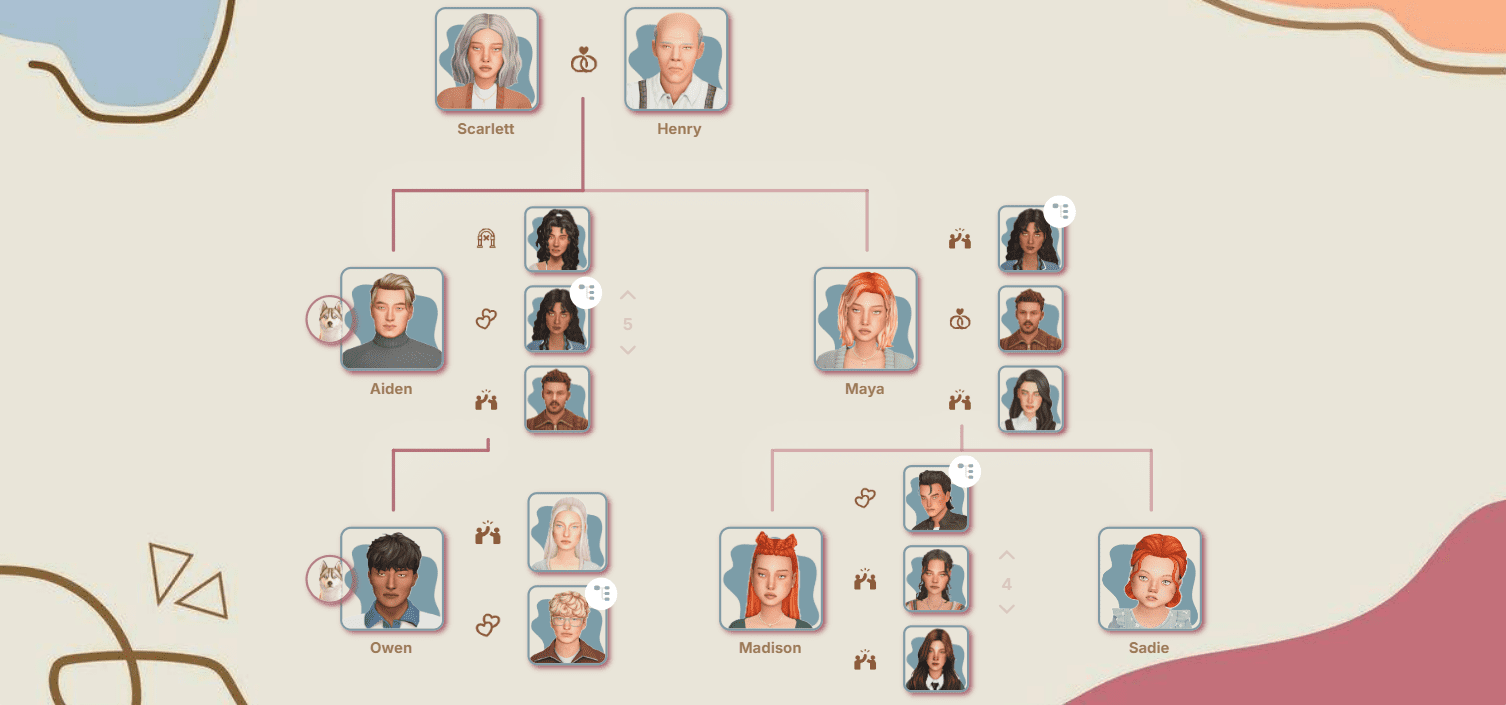
                                                                                                                                                                                               

                                                                                                                                                                                              nanaznaet:

                                                                                                                                                                                              The Duke Family Tree

                                                                                                                                                                                               
                                                                                                                                                                                              You might also like...
                                                                                                                                                                                              Preview for Why I Created a Family Tree for My Sims Family
                                                                                                                                                                                              Why I Created a Family Tree for My Sims Family
                                                                                                                                                                                              Preview for How to Make Beautiful Sims Family Tree
                                                                                                                                                                                              How to Make Beautiful Sims Family Tree
                                                                                                                                                                                              Preview for Creative Family Tree Ideas for The Sims: Tips and Examples
                                                                                                                                                                                              Creative Family Tree Ideas for The Sims: Tips and Examples
                                                                                                                                                                                              TheSimsTree

                                                                                                                                                                                              TheSimsTree

                                                                                                                                                                                              The most avid Sims players. Their first word was 'Sul-Sul'. We're writing about the service and its capabilities, the workflow, the team and sharing stories of our dynasties.